
Top 10 Beaches in the World
Contents
Introduction
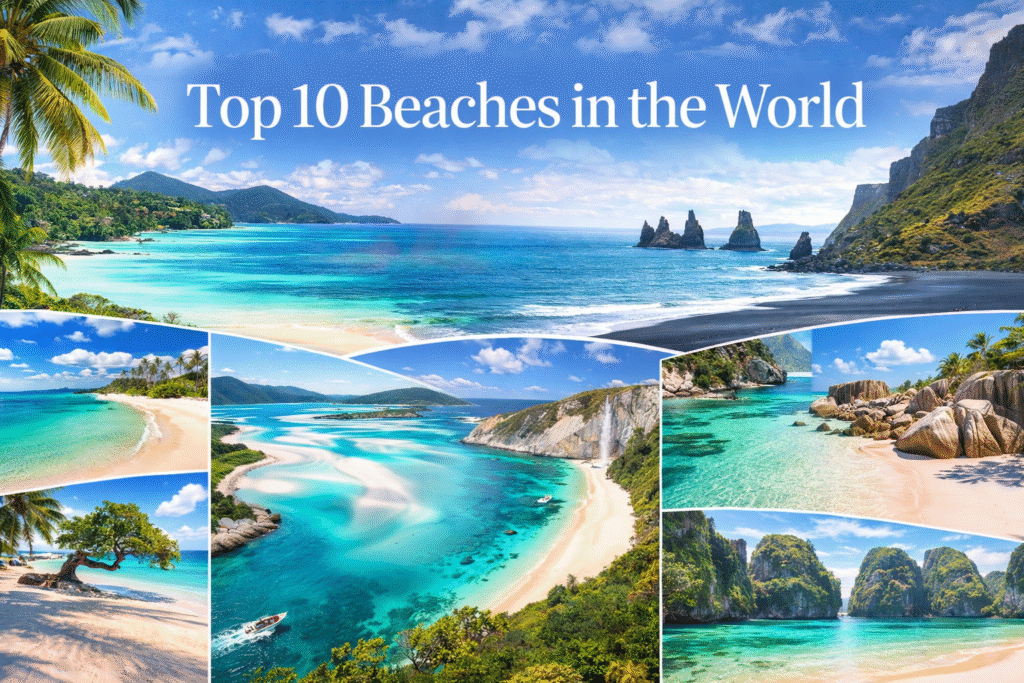
The allure of a world-class beach extends far beyond just being “good-looking.” In top-ranking Google articles, frequently cited evaluation criteria include: integrity of the natural landscape, quality of seawater and sand, accessibility, visitor experience, and ecological conservation. This article synthesizes these dimensions, combining visitor statistics, international travel awards, and data from authoritative tourism bodies to compile a list of the current most representative Top 10 Beaches in the World, explaining why they consistently rank at the top.
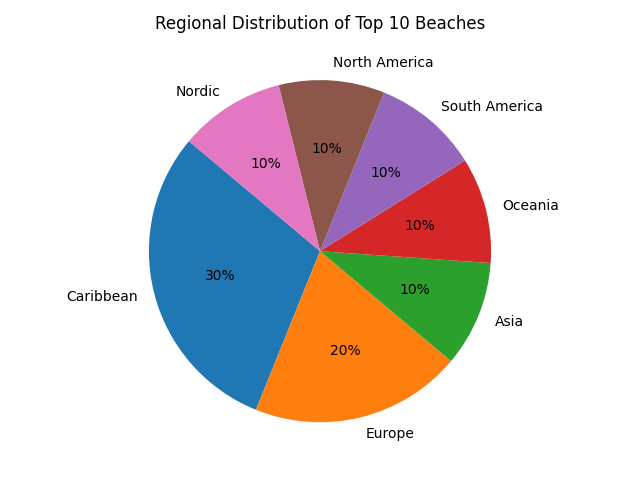
Quick Ranking Overview
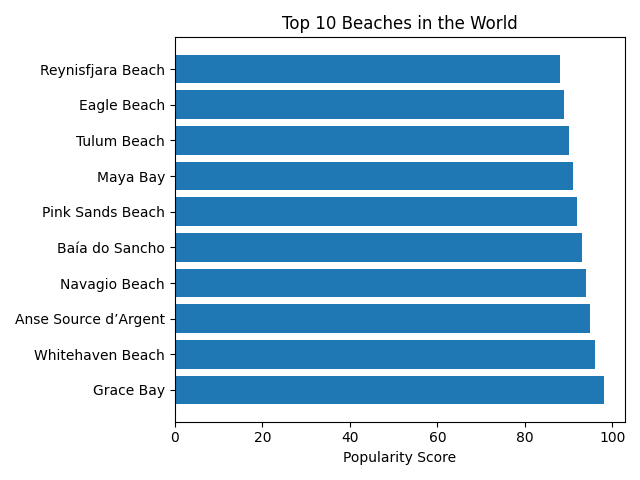
| Rank | Beach | Country / Region |
|---|---|---|
| 1 | Grace Bay | Turks and Caicos |
| 2 | Whitehaven Beach | Australia |
| 3 | Anse Source d’Argent | Seychelles |
| 4 | Navagio Beach | Greece |
| 5 | Baía do Sancho | Brazil |
| 6 | Pink Sands Beach | Bahamas |
| 7 | Maya Bay | Thailand |
| 8 | Tulum Beach | Mexico |
| 9 | Eagle Beach | Aruba |
| 10 | Reynisfjara Beach | Iceland |
Methodology & Data Notes
This list is based on cross-referencing multiple sources and is not a single ranking result. The main reference dimensions include:
Visitor Numbers & Popularity
(Annual visitors, search volume popularity)
Natural Landscape Quality
(Water clarity, sand quality, uniqueness)
Recognition in International Media & Authoritative Lists
Visitor Satisfaction & Sustainable Tourism Ratings
Data sources include reports from the UNWTO, Tripadvisor Travelers’ Choice, Statista, the World Tourism Organization, and various international travel media. As different sources have different emphases, the article adopts a method of comprehensive comparison rather than simple weighted scoring to avoid “single-index distortion.”
It should be noted that visitor numbers for some beaches are estimated at the regional or scenic-area level, not precise official statistics for a single stretch of sand; the article strives to use verifiable data from within the last three years.
In-depth Analysis of the Top 10 Beaches
1. Grace Bay (Turks and Caicos)
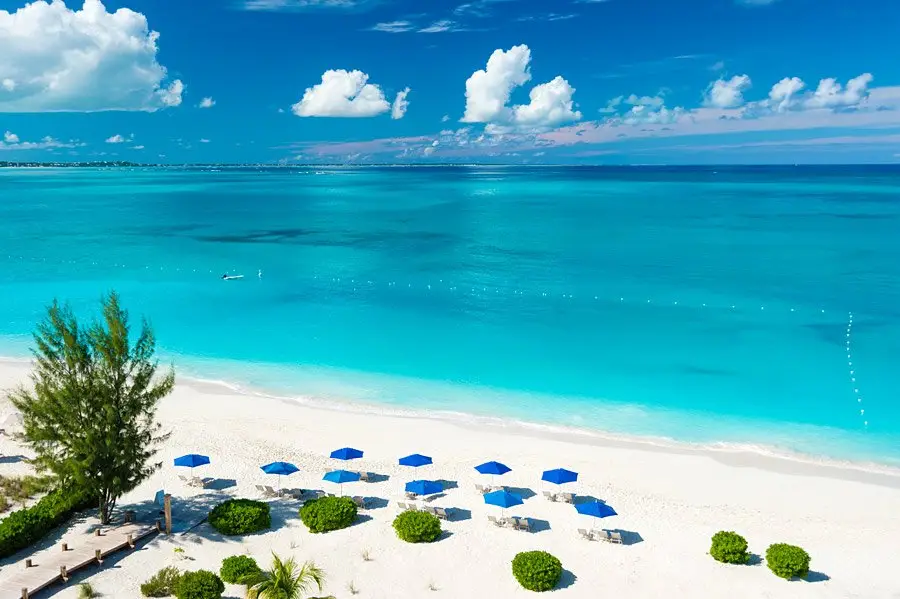
Grace Bay consistently tops lists by TripAdvisor and Condé Nast Traveller.
Its advantages lie in very low wave action, exceptionally clear water, and several continuous kilometers of fine white sand.
Protected by a coral reef, it is suitable for swimming year-round, and visitor satisfaction is perennially ranked number one in the Caribbean region.
2. Whitehaven Beach (Australia)
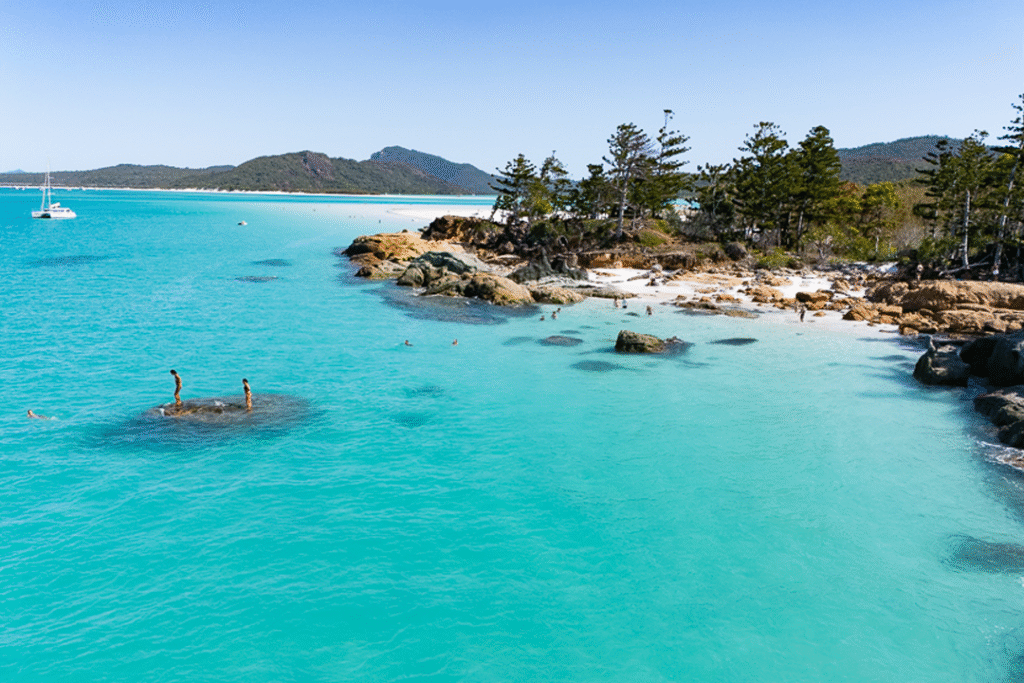
Whitehaven Beach is renowned for its sand, which is 98% pure silica and retains almost no heat.
Located within the Great Barrier Reef Marine Park, it is accessible only by boat or helicopter, resulting in minimal human disturbance. It is a rare global example of a beach that boasts both high fame and high levels of pristine condition.
3. Anse Source d’Argent (Seychelles)
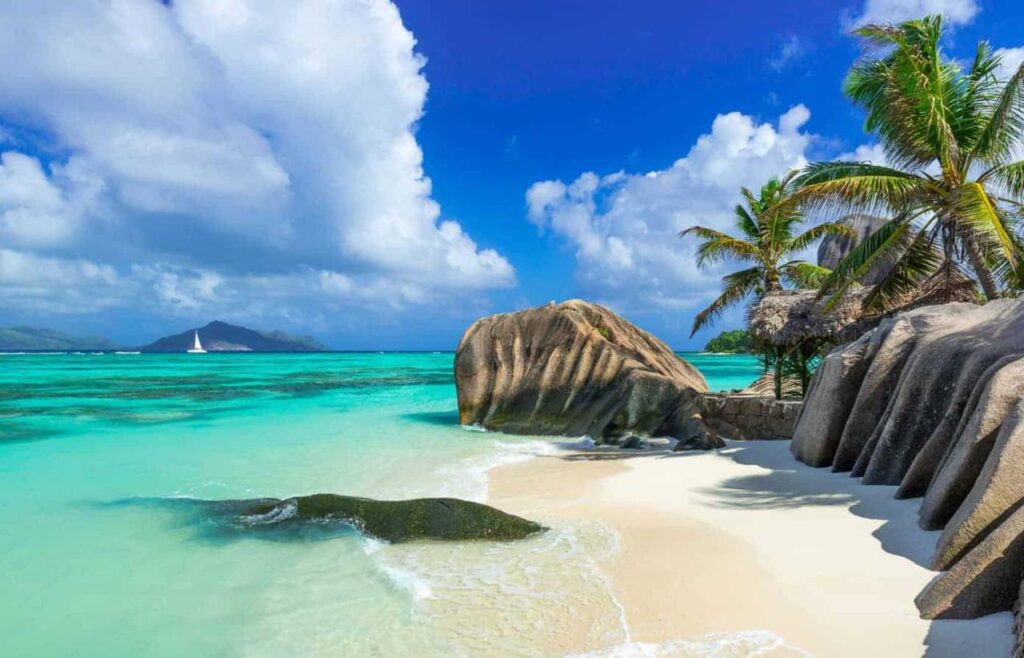
Granite boulders, light-green water, and tropical vegetation create a highly recognizable visual signature.
It is one of the most photographed beaches in the world, yet protected by visitor flow restrictions, avoiding over-commercialization.
4. Navagio Beach (Greece)
Also known as “Shipwreck Beach,” it is surrounded by cliffs and accessible only by sea.
Its high ranking stems from the scarcity of its unique terrain, not traditional resort-style comfort, making it a typical “visual destination.”
5. Baía do Sancho (Brazil)
Multiple times voted the #1 beach in the world.
Its strengths are exceptionally high water quality scores and intact, pristine ecology. Entry involves navigating steps through a cliff face, effectively controlling visitor density.
6. Pink Sands Beach (Bahamas)
The sand exhibits a soft pink hue, derived from microscopic foraminifera (sea creature) shells.
This beach strikes a balance between visual uniqueness and resort comfort, representing the high-end vacation market.
7. Maya Bay (Thailand)
Its fame exploded after featuring in the movie “The Beach.”
Following overtourism, the Thai government implemented a multi-year closure for restoration. It now operates with a core management strategy of visitor caps and ecological recovery, serving as a classic case study in sustainable tourism.
8. Tulum Beach (Mexico)
It uniquely combines a Caribbean beach, Mayan ruins, and low-density eco-hotels.
In recent years, it has seen rapid growth in search volume among the “slow travel” and “digital nomad” communities.
9. Eagle Beach (Aruba)
Known for its spaciousness, low visitor density, and well-developed public facilities.
Frequently rated as one of the “best beaches for extended stays.”
10. Reynisfjara Beach (Iceland)
Black sand, basalt columns, and powerful surf create a striking contrast.
While unsuitable for swimming, it consistently ranks high on lists of “extreme natural landscapes.”
Travel Trends
Beaches focused on ecological conservation continue to rise in rankings. Visitor flow management has become a common feature among world-class beaches. Search behavior is shifting from “most beautiful beach” to “worth visiting” and “is it crowded.” Lesser-known beaches with high visual distinction (e.g., black sand, pink sand) are gaining popularity more easily.
Frequently Asked Questions (Q&A)
Q1: Are these beaches ranked by “beauty”?
A1: No. The ranking comprehensively considers visitor numbers, international recognition, natural conditions, and experience quality, not just visual appeal.
Q2: Why aren’t some small but beautiful beaches on the list?
A2: The list leans towards “global influence.” Some lesser-known beaches, while stunning, may lack sufficient visitor volume or international data coverage.
Q3: Does the ranking change yearly?
A3: Yes. Influenced by tourism recovery, climate change, flight route availability, and social media, popularity fluctuates annually.
Q4: Do high visitor numbers guarantee a better experience?
A4: Not necessarily. High numbers indicate fame, but peak seasons can bring crowds. The experience depends on timing of visit and management standards.
Q5: Are safety factors considered?
A5: Indirectly. Reference sources typically exclude beach areas with high safety concerns or long-term access restrictions.
Q6: Are they suitable for families or children?
A6: Some are more family-friendly (shallow water, good facilities), while others are better for diving or adventure. It depends on the specific location.
Q7: Do these beaches face overtourism issues?
A7: Yes. Several listed beaches have implemented visitor caps or conservation measures, a key issue in global tourism today.
Q8: How to choose the best beach for myself?
A8: Consider your travel purpose (relaxation, diving, photography, family), season, and budget, rather than relying solely on rankings.
Conclusion
The competition among the world’s top beaches has shifted from pure natural beauty to ecological management, experience quality, and sustainability. Beaches that rank highly generally have strict protection mechanisms and maintain a balance between tourist numbers and environmental capacity. In the future, beaches that remain on such lists long-term will not just be “pretty,” but will be “well-managed.”
Data Sources
TripAdvisor Travelers’ Choice – Beaches
https://www.tripadvisor.com/TravelersChoice-Beaches
Condé Nast Traveller – World’s Best Beaches
https://www.cntraveler.com
World Tourism Organization (UNWTO)
https://www.unwto.org
National Geographic Travel
https://www.nationalgeographic.com/travel
World Beach Guide
https://www.worldbeachguide.com