
Top 10 Cotton Producing Countries in the World
Contents
Introduction
Cotton, a seemingly soft fiber, has been an integral part of human civilization since ancient times. It blooms in fields, spins in machines, and is woven into the clothes and bedding of millions of households. Who grows the most? Whose cotton fields stretch far and wide? Whose cotton industry supports the global textile supply chain? This article will take you through farmlands, factories, and international trade, using data and narrative to outline the top ten cotton-producing countries globally, along with their geographical, economic, and social significance.
Data Explanation
Primary Data Sources
Multiple public statistical databases and industry reports, including but not limited to the International Cotton Advisory Committee (ICAC), agricultural statistics websites, and annual industry reports.
Indicator
Country-specific “Cotton Production” (measured in million tonnes of cotton lint production), primarily based on publicly available data from recent years.
Note
Due to differing statistical methods and reporting cycles, production figures may vary slightly between sources; the data used herein are publicly verifiable estimates suitable for macro-level comparison and trend observation.
Ranking — Top 10 Countries by Cotton Production
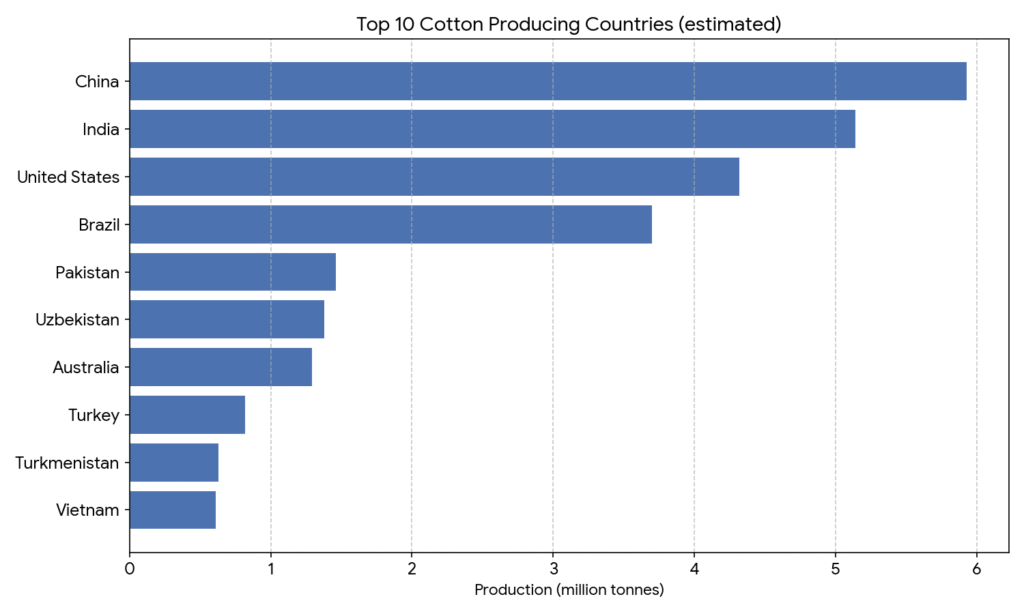
| Rank | Country | Production (Million Tonnes, approx.) |
|---|---|---|
| 1 | China | ~6-7 |
| 2 | India | Ranked top two globally |
| 3 | United States | Ranked top three globally |
| 4 | Brazil | Ranked fourth globally |
| 5 | Pakistan | Consistently top five globally |
| 6 | Uzbekistan | Major Central Asian producer, top ten globally |
| 7 | Australia | Top ten globally, leading yield per unit |
| 8 | Turkey | Stable top ten position |
| 9 | Turkmenistan | Major producer in Central Asia |
| 10 | Vietnam | Position influenced by import-for-processing; limited domestic production |
Country Profiles
1. China
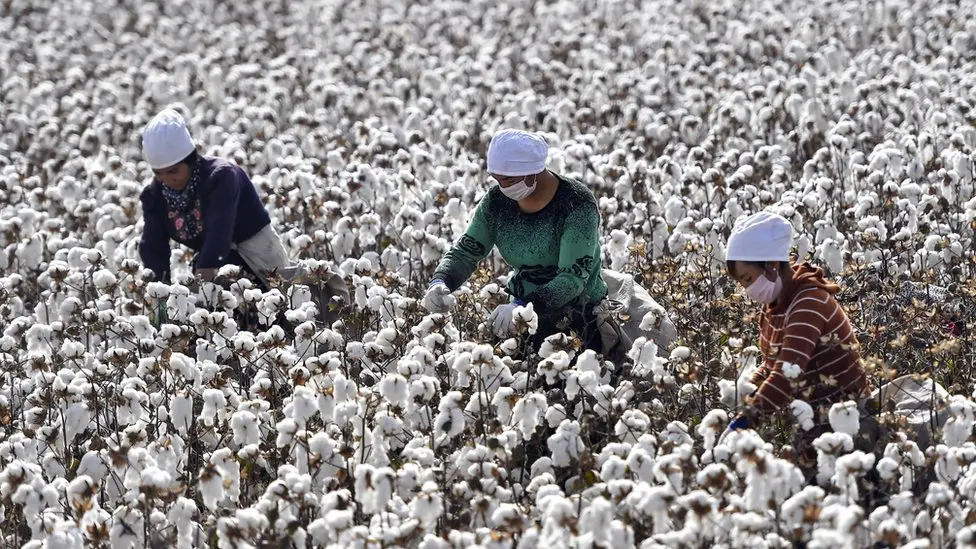
Production Status: Ranked top three globally, with an annual production of approximately 6–7 million tonnes; Xinjiang accounts for over 85%.
Cultivation & Natural Conditions: Typical arid, sunny region combined with drip irrigation technology results in high fiber stability and whiteness.
Industrial Chain & Economic Significance: Possesses the world’s most complete cotton textile industry chain; production supplies both domestic consumption and global exports via textiles.
2. India
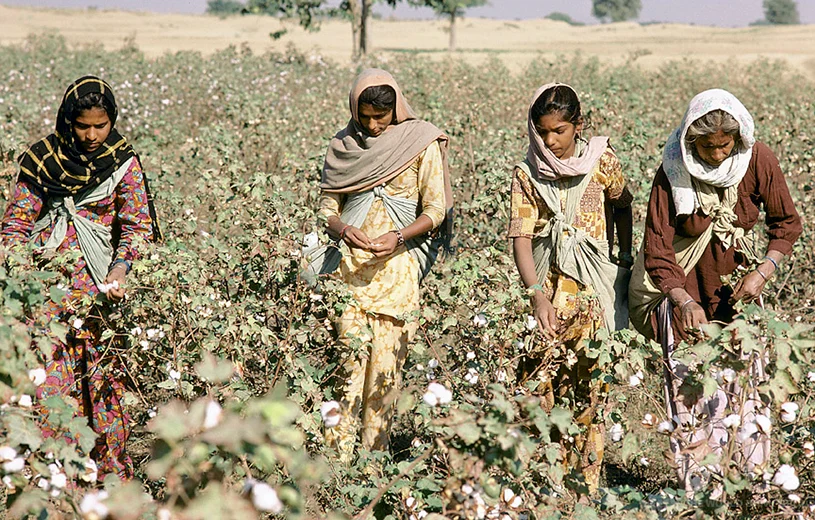
Production Status: Ranked top two globally, involving millions of smallholder farmers.
Cultivation & Natural Conditions: Reliant on monsoons, leading to significant production volatility; diverse cotton varieties result in noticeable fiber differences.
Industrial Chain & Economic Significance: Cotton is crucial for vast textile employment and is a major pillar of Indian exports.
3. United States
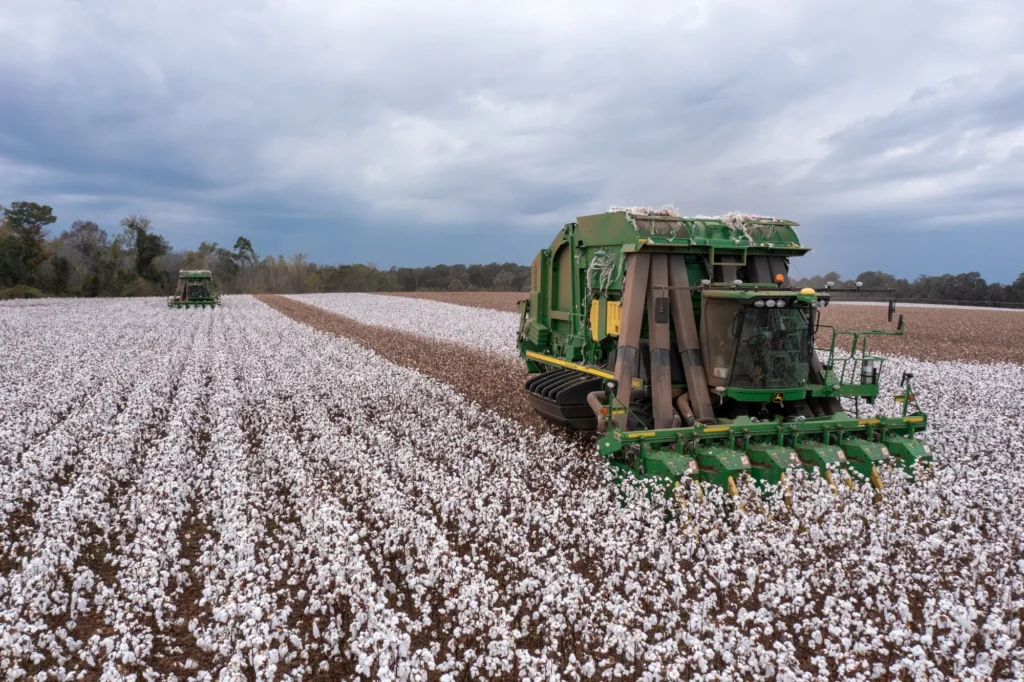
Production Status: Ranked top three globally; approximately 70% is exported.
Cultivation & Natural Conditions: Highly mechanized and large-scale farms in states like Texas and Mississippi.
Industrial Chain & Economic Significance: US cotton is renowned for high quality and is a long-term, reliable supply source for international spinning mills.
4. Brazil
Production Status: Ranked fourth globally; one of the fastest-growing cotton exporters.
Cultivation & Natural Conditions: The Cerrado plateau is suitable for large-scale agriculture; mature mechanized systems boost yield.
Industrial Chain & Economic Significance: High-quality cotton is highly competitive internationally and is a key component of Brazilian agricultural exports.
5. Pakistan
Production Status: Consistently ranked in the global top five; annual yield fluctuates with climate.
Cultivation & Natural Conditions: Relies on river irrigation in Punjab and Sindh; significantly affected by extreme weather.
Industrial Chain & Economic Significance: Cotton textile exports account for 50–60% of national foreign exchange earnings, making it a critical industry.
6. Uzbekistan
Production Status: Major cotton region in Central Asia, within the global top ten.
Cultivation & Natural Conditions: Relies on irrigation systems; gradually shifting towards sustainable cotton standards.
Industrial Chain & Economic Significance: Post-reform, focus is on reducing inefficient expansion to improve fiber quality and export competitiveness.
7. Australia
Production Status: Ranked within the global top ten, with world-leading yield per unit area.
Cultivation & Natural Conditions: Low rainfall compensated by precision irrigation; efficient farming systems support stable production.
Industrial Chain & Economic Significance: Primarily export-oriented; high-quality cotton fiber commands firm prices on the international market.
8. Turkey
Production Status: Holds a stable position in the top ten; mostly supplies the domestic textile industry.
Cultivation & Natural Conditions: Limited arable land; emphasis on quality (fiber length, cleanliness) over sheer quantity.
Industrial Chain & Economic Significance: Strong garment manufacturing sector drives cotton demand, making it a key link in the cotton-textile value chain.
9. Turkmenistan
Production Status: Major producer in the Central Asian region.
Cultivation & Natural Conditions: Primarily state-planned cultivation areas, reliant on labor and traditional irrigation systems.
Industrial Chain & Economic Significance: Cotton exports are a significant part of the national revenue; transitioning towards sustainable production.
10. Vietnam
Production Status: Position in the top ten is significantly influenced by “import for processing” statistics; domestic production is limited.
Cultivation & Natural Conditions: Small-scale cotton areas are reviving but constrained by terrain and rainfall.
Industrial Chain & Economic Significance: World-leading textile manufacturing creates huge cotton demand; the national focus is more on textile processing than cotton field expansion.
Global Significance and Trends in the Cotton Industry
A Key Link in the Global Textile Supply Chain
Cotton is the basic raw material for clothing, home textiles, and industrial fabrics. Changes in its production directly affect global textile prices and supply.
Pressure for Sustainability and Green Agriculture
Traditional cotton farming often uses significant water and fertilizers. The future requires promoting water-saving techniques, improved seeds, ecological cotton, and Fair-Trade mechanisms.
Traceability from Field to Garment
More clothing brands are demanding traceable, sustainable cotton, pushing producing countries to enhance transparency in cultivation and processing.
Dual Challenges of Climate and Market
Drought, unstable precipitation, international trade fluctuations, and price volatility can all impact yield and farmer incomes.
Q&A
Q1: Why have China and India consistently been the top two in cotton rankings?
A1: Because both possess: Vast cultivated land area. A large labor force or mechanized systems. A complete textile industrial chain. Stable domestic consumption demand. They have the most pronounced advantages in the cotton “cultivation-processing-garment” chain.
Q2: Which country’s cotton quality is the best?
A2: Different countries have different strengths: United States: Uniform fiber length, high cleanliness. Australia: High yield per unit area, comprehensive sustainable certifications. Brazil: Strong fiber toughness, suitable for high-quality spinning. Egypt (though not in the top ten by volume): World’s top long-staple cotton. “Best” depends on the intended final product.
Q3: Is cotton really very water-intensive?
A3: Yes, but it depends on the farming method. Traditional irrigation: High water consumption. Drip irrigation + precision agriculture: Significant water-saving effects. Countries like China (Xinjiang) and Australia have made substantial progress in water-saving technology recently.
Q4: Why do cotton prices often fluctuate?
A4: Main reasons include: Extreme weather (drought, heavy rain). Global apparel demand. Export policies. Speculation in futures markets. Fluctuations in the US dollar exchange rate. Cotton is a highly internationalized and financialized commodity.
Q5: Which country is most likely to experience rapid growth in the future?
A5: Based on current trends: Brazil: Has room for expansion. United States: Stable technological growth. Turkey: Developing high-end organic cotton. Central Asian countries also have potential for recovery following irrigation reforms.
Q6: Will cotton be replaced by synthetic fibers?
A6: It will not be completely replaced. Cotton: Skin-friendly, breathable, natural. Synthetics: Inexpensive, high strength, wrinkle-resistant. The future is more likely to involve “blended coexistence” rather than complete substitution.
Q7: Is cotton environmentally friendly?
A7: It depends on how it’s grown. Traditional methods: Can involve high water use and fertilizer pressure. Modern sustainable cotton (e.g., BCI, organic): Reduces water consumption by 20–50% and significantly lowers pollution. “Whether cotton itself is eco-friendly” is not the same as “how the cotton farmer grows it“.
Conclusion
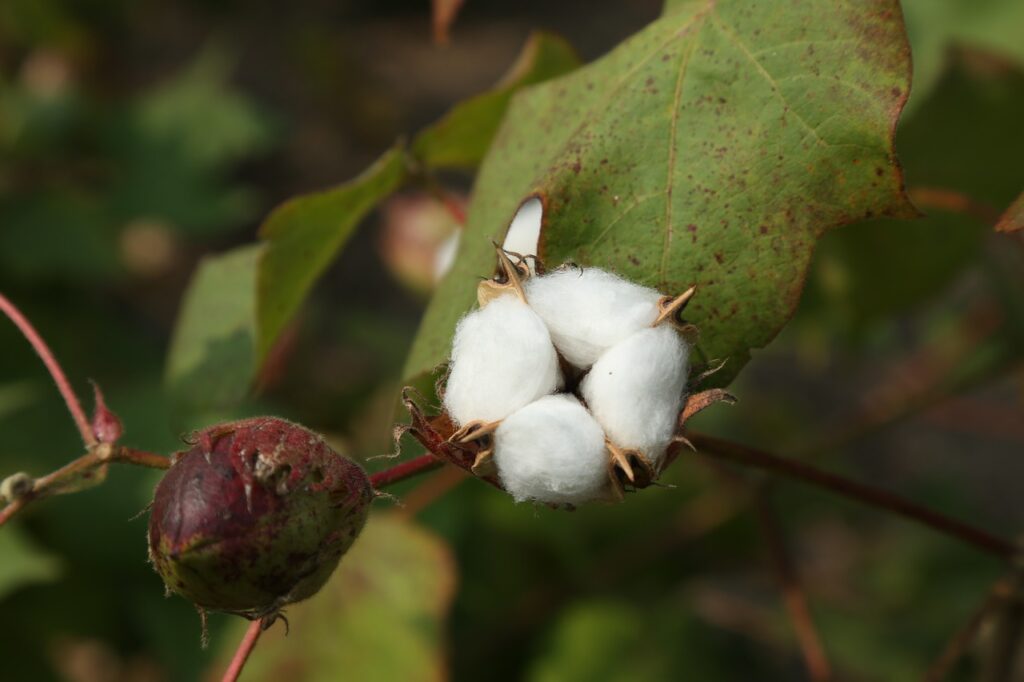
Cotton is a fiber rooted in the earth and woven into the world’s clothing. From the vast irrigated fields of China and the manual picking by Indian farmers, to the highly mechanized large farms of the United States, and the traditional cotton regions of Brazil, Pakistan, and Central Asian countries, they collectively shoulder the global demand for cotton while also facing shared challenges related to climate, environment, market volatility, and fair trade. Finding a balance between yield, quality, environmental responsibility, and social equity is the shared task for the global cotton industry and indeed, for everyone. May this ranking and analysis not only inform you about “who the major cotton producers are” but also inspire reflection on “how we should safeguard the future of this natural fiber.”
Data Sources
FAO — Cotton pages / World Cotton Day: https://www.fao.org/markets-and-trade/food-and-agricultural-markets-analysis-FAMA/cotton/en. FAOHome
ICAC / OECD-FAO cotton outlook (summary): https://www.oecd.org/en/publications/2025/07/oecd-fao-agricultural-outlook-2025-2034_3eb15914/full-report/cotton_a0374fa8.html. OECD+1
Report summarizing 2023 production: (reportlinker summary) https://www.reportlinker.com/dataset/8dca7599893373a2c1a9fa865025439fd24e84e7. reportlinker.com
WorldPopulationReview cotton overview: https://worldpopulationreview.com/country-rankings/cotton-production-by-country. World Population Review