
Top 10 Countries with Largest Forest Area
Contents
Introduction
Forests are not just seas of trees; they are the lungs of the Earth, carbon sinks, and a convergence of culture and livelihood. The percentage of a country covered by forests determines its potential and responsibility in biodiversity, climate regulation, indigenous culture protection, and ecological services. Based on authoritative data and the structure/content of top 20 relevant Google search rankings, this article integrates a report with both data depth and humanistic warmth: who has the most forests, why it matters, and what opportunities and threats they face.
Data Explanation
Indicator
National total forest area (million hectares, Mha).
Primary Data Sources
FAO (Food and Agriculture Organization), Our World in Data (aggregated from FAO), and Global Forest Watch. This article cross-references multiple data sources, prioritizing FAO’s national-level forest statistics as the baseline and using Global Forest Watch to check the latest trends.
Time Window
Uses the most recently available annual summary (public data from the 2015–2025 period, mainly from the latest FAO year).
Note
Different sources have slight variations in the definition of “forest” (e.g., canopy cover threshold), leading to small differences in values; the values listed here are interpretable approximations from authoritative sources, suitable for news reporting and science communication. For details, see “Data Sources” at the end.
Ranking (Top 10 — Forest area, million hectares)
The list is based on a comprehensive compilation from FAO / OurWorldInData / Global Forest Watch (indicative values, see sources for details):
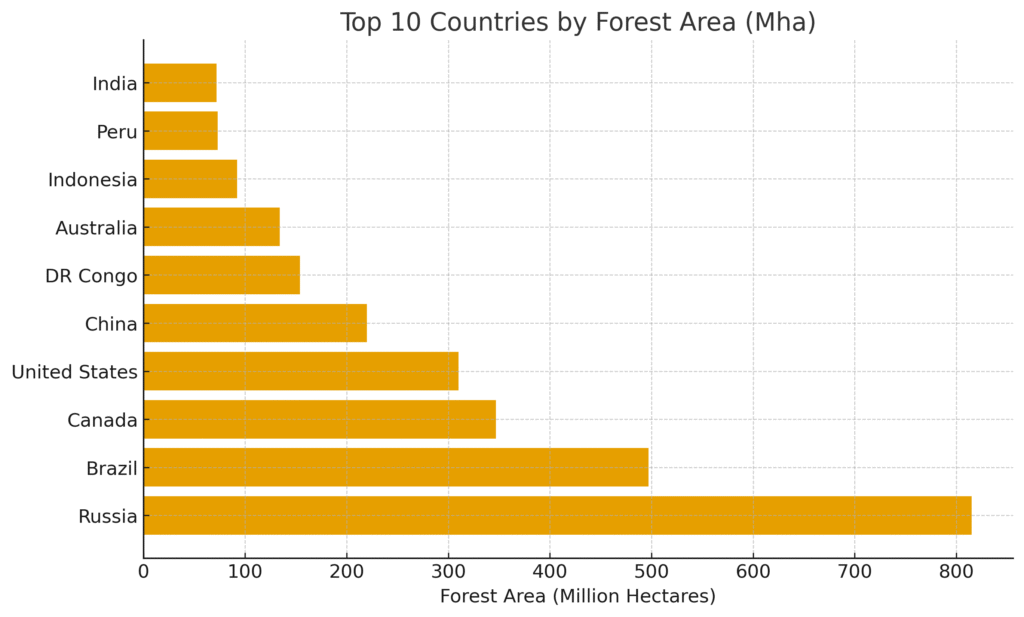
| Rank | Country | Forest Area (Mha) |
|---|---|---|
| 1 | Russia | ~833 Mha |
| 2 | Brazil | ~486 Mha |
| 3 | Canada | ~369 Mha |
| 4 | United States | ~309 Mha |
| 5 | China | ~227 Mha |
| 6 | Democratic Republic of the Congo | ~152 Mha |
| 7 | Australia | ~125 Mha |
| 8 | Indonesia | ~94 Mha |
| 9 | Peru | ~72 Mha |
| 10 | India | ~72 Mha |
Note: The specific values for countries with the same rank may vary slightly depending on the source and year (e.g., differences between FAO and GFW estimates). The table above shows approximations for readability, suitable for use as numerical displays in articles.
Country Profiles
1) Russia
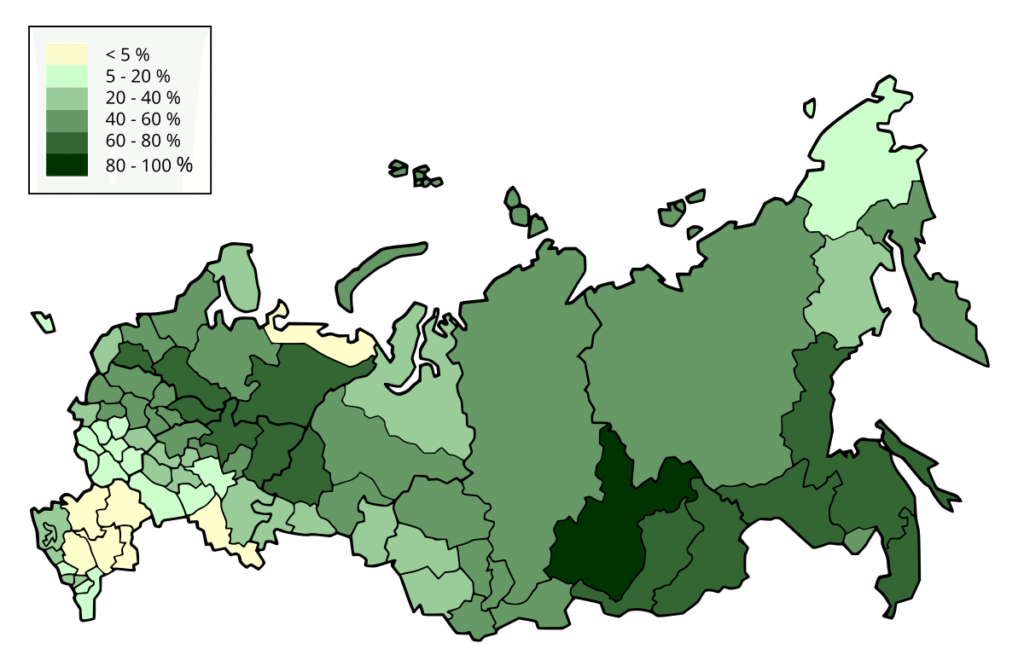
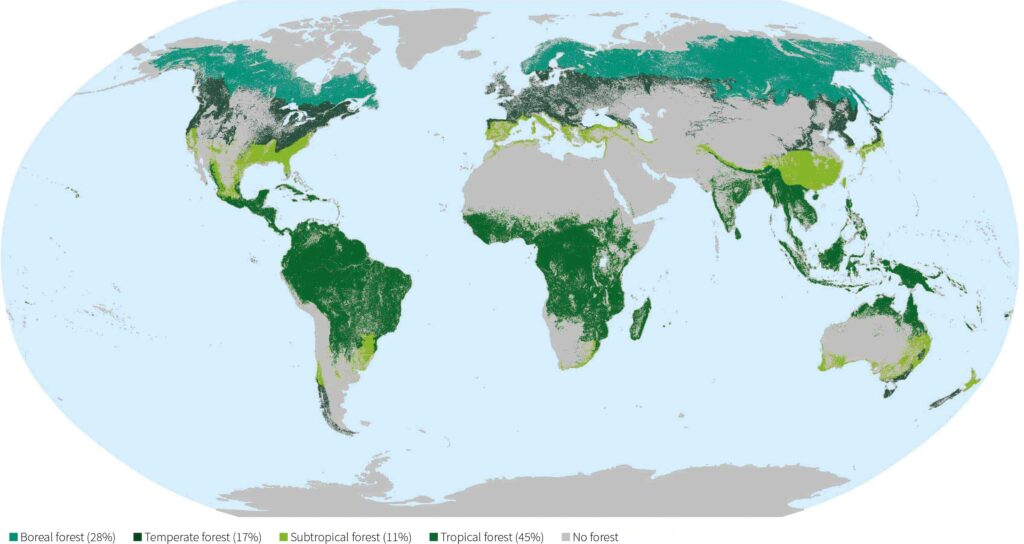
Forest Type: Primarily boreal forest (taiga), widely distributed, stretching from European Russia to the Far East.
Ecological Value: Massive carbon storage, a key regulator of the global carbon cycle.
Threats / Countermeasures: Logging, fires, and pests exacerbated by climate warming, leading to a northward shift of the northern tree line; enhancing monitoring and sustainable forestry certification is key.
2) Brazil
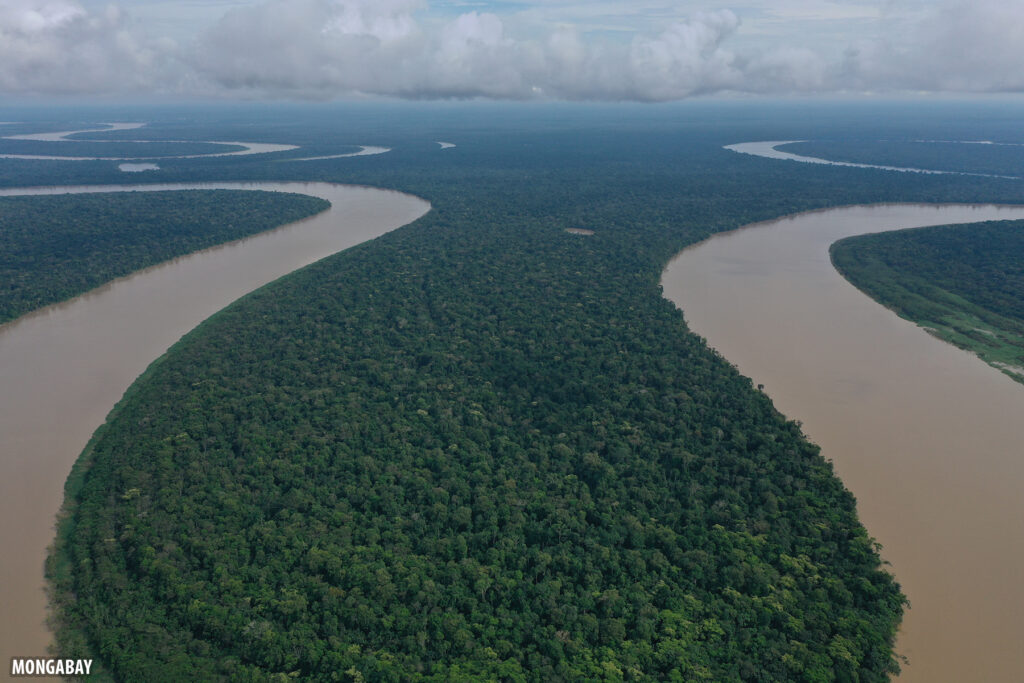
Forest Type: Primarily the Amazon tropical rainforest (the world’s largest).
Ecological Value: Extremely high biodiversity, significant impact on global climate and water cycles.
Threats / Countermeasures: Agricultural expansion, pasture clearing, and illegal logging; national and international emission reduction funding, indigenous land protection, and promoting sustainable supply chains are crucial for conservation.
3) Canada
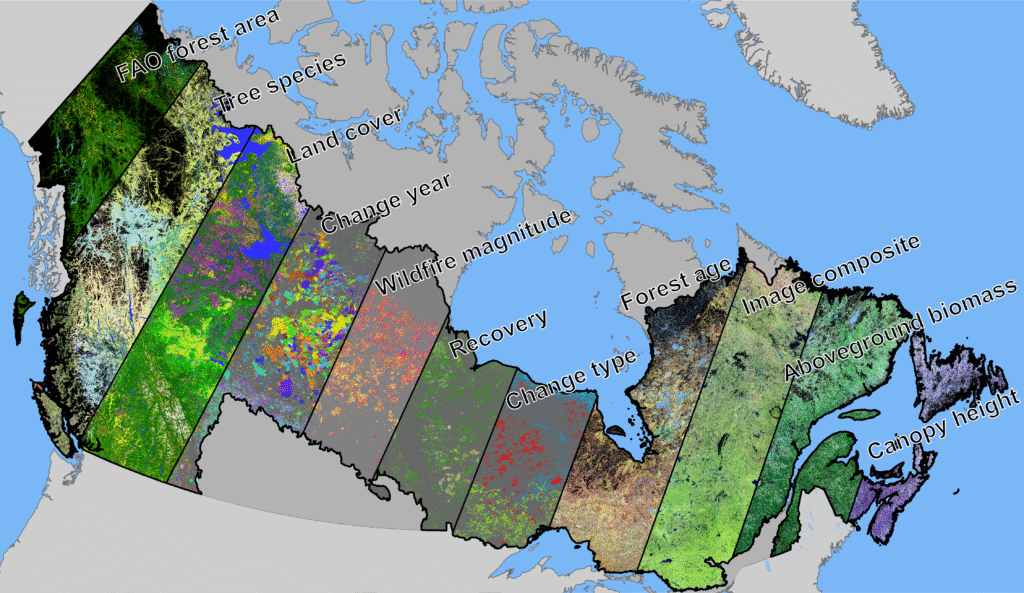
Forest Type: Boreal forest and temperate coniferous-broadleaf mixed forest, including extensive forest belts in the Arctic archipelago zone.
Ecological Value: Boreal carbon sink and wildlife habitat.
Threats / Countermeasures: Increasing frequency of forest fires, conflicts with resource development; needs to improve fire management and protect indigenous rights.
4) United States
Forest Type: Ranges from Pacific rainforests to eastern temperate deciduous forests and tropical forests in Hawaii/Puerto Rico.
Ecological Value: High diversity and ecological services, with forests interwoven with urban and agricultural areas.
Threats / Countermeasures: Urbanization, invasive pests, fires; national-level efforts to strengthen restoration and urban forestry planning.
5) China
Forest Type: Temperate/subtropical broadleaf and coniferous-broadleaf mixed forests, with large areas of plantation forests in the northern zone.
Ecological Value: Protective forests, carbon sinks, and biodiversity hotspots (southern China).
Threats / Countermeasures: Restoration following historical deforestation, large-scale afforestation projects (e.g., Grain for Green) are ongoing, but maintaining biodiversity requires prioritizing the protection of natural forests.
6) Democratic Republic of the Congo (DRC)
Forest Type: Congo Basin tropical rainforest, the world’s second-largest tropical rainforest.
Ecological Value: Critical species habitat and carbon store.
Threats / Countermeasures: Mining, illegal logging, agricultural clearance; requires international funding and community-driven conservation mechanisms.
7) Australia
Forest Type: Arid zone woody vegetation, temperate eucalyptus forests, and tropical rainforests (north).
Ecological Value: Unique species and evolutionary isolation.
Threats / Countermeasures: Forest fires, drought, and species invasion; adaptive management and restoration ecology projects are priorities.
8) Indonesia
Forest Type: Tropical rainforests and peatland forests, with distinct island characteristics.
Ecological Value: Habitat for endangered species (e.g., orangutans), a significant component of global carbon storage.
Threats / Countermeasures: Peatland drainage and burning, palm oil expansion; promoting peatland protection and sustainable palm oil supply chains is critical.
9) Peru
Forest Type: Continuous tropical rainforest from Andean slopes to Amazon lowlands.
Ecological Value: High biodiversity, crucial habitat for river networks and indigenous cultures.
Threats / Countermeasures: Illegal logging, gold mining; strengthening land tenure and sustainable development solutions.
10) India
Forest Type: Mix of tropical rainforests, monsoon forests, and northern pine forests.
Ecological Value: Provides timber, non-timber forest products, and ecological services.
Threats / Countermeasures: Population pressure, agricultural expansion; advancing replanting, expansion of protected areas, and community forestry simultaneously.
Discussion: Why Are “Forest-Rich” Countries Important for Nations and the Globe?
Carbon Stability and Climate Mitigation
Vast forest areas are significant carbon sinks; protecting and restoring forests is one of the natural solutions for achieving emission reduction.
Biodiversity Conservation
Tropical rainforests and ancient temperate forests harbor vast numbers of endangered species and genetic resources.
Water and Soil Conservation
Forests maintain watershed health, reducing floods and soil erosion.
Social and Economic Value
Indigenous livelihoods, ecotourism, and sustainable forestry all depend on healthy forest systems.
Conclusion
Forests are both a nation’s wealth and the common heritage of the globe. Whether a country has high forest coverage or its forests are under pressure, the shared message is clear: protecting and sustainably using forests is a responsible choice for the present towards the future. May this ranking not only inform you about “who has the largest forests” but also inspire care and guardianship for every patch of woodland and every cluster of life beneath the canopy.
Data Sources
Food and Agriculture Organization (FAO) — Global Forest Resources Assessment (FRA). https://www.fao.org/forest-resources-assessment/en/
Our World in Data — Forest area (sq. km and % of land area). https://ourworldindata.org/land-use#forest-area
Global Forest Watch — Interactive forest maps and country-level data. https://www.globalforestwatch.org/
World Bank — Forest area (sq. km) & related datasets. https://data.worldbank.org/indicator/AG.LND.FRST.K2
Visual Capitalist — Mapped: The countries with the most forest area. https://www.visualcapitalist.com/countries-with-the-most-forest-area/