
Top 10 Richest Person in the World
Contents
Introduction
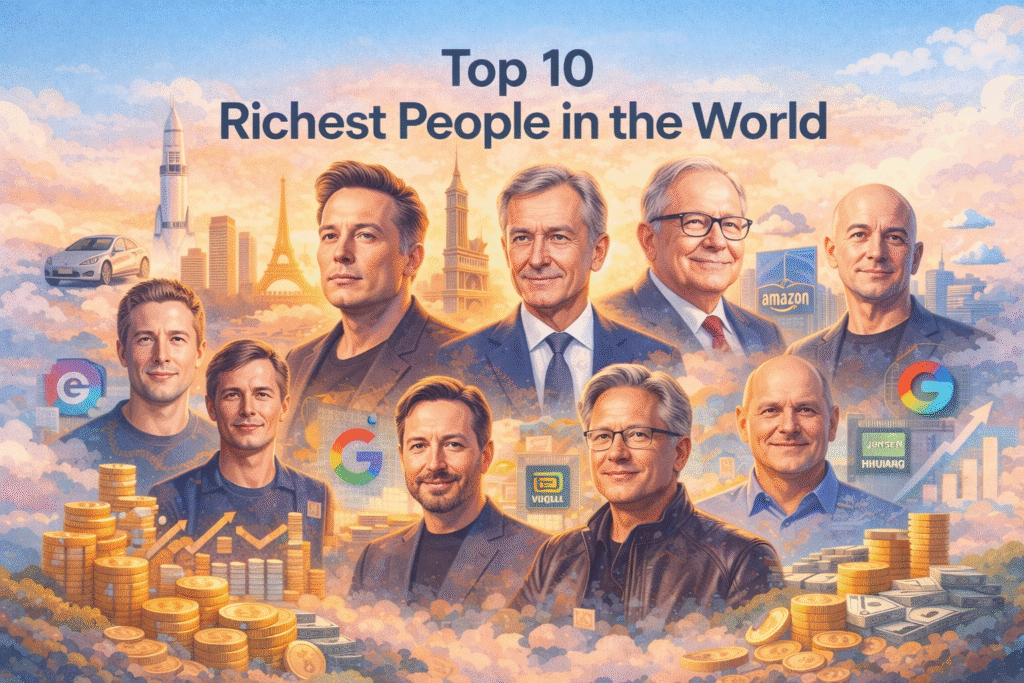
The world’s wealthiest individuals are not a static list, but a constantly shifting economic map. Changes in wealth rankings often reflect the convergence of industry cycles, capital preferences, and technological waves. Rather than just focusing on “who is richer,” it is more insightful to understand where this wealth originates, why it can persist, and whether it will remain competitive in the future. This article, based on mainstream real-time wealth rankings, outlines the ten richest individuals in the world today. By combining industry context, wealth structure, and future trends, it provides a more complete and understandable perspective.
Data Notes
This article primarily references public data from the Bloomberg Billionaires Index and the Forbes Real-Time Billionaires list. These rankings are estimates based on public company stock prices, disclosed ownership structures, and verifiable assets. It is important to note that the net worth figures in these lists are not “cash readily available for use,” but theoretical valuations that fluctuate with the market. Therefore, this article emphasizes structural analysis over the precise numbers themselves.
Chart
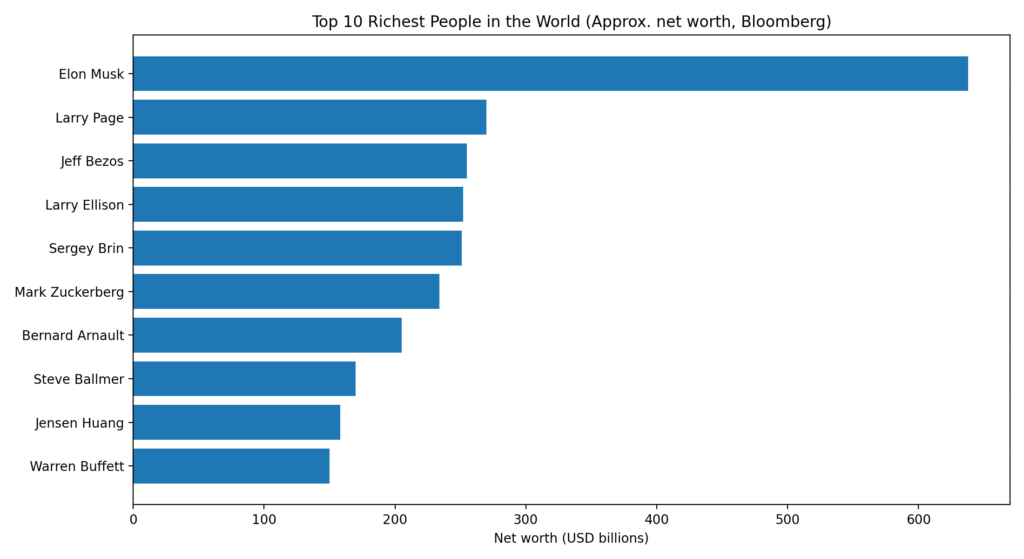
Bar Chart: Top 10 Richest People in the World (Net Worth, USD Billions)
Top 10 Snapshot
Rank, Name, Net Worth (USD bn), Main Industry
1, Elon Musk, ~638, Technology / Automotive 2, Larry Page, ~270, Internet / AI 3, Jeff Bezos, ~255, E-commerce / Cloud 4, Larry Ellison, ~252, Enterprise Software 5, Sergey Brin, ~251, Internet / AI 6, Mark Zuckerberg, ~234, Social Media 7, Bernard Arnault, ~205, Luxury Goods 8, Steve Ballmer, ~170, Technology 9, Jensen Huang, ~158, Semiconductors / AI 10, Warren Buffett, ~150, Investment
Detailed Profiles
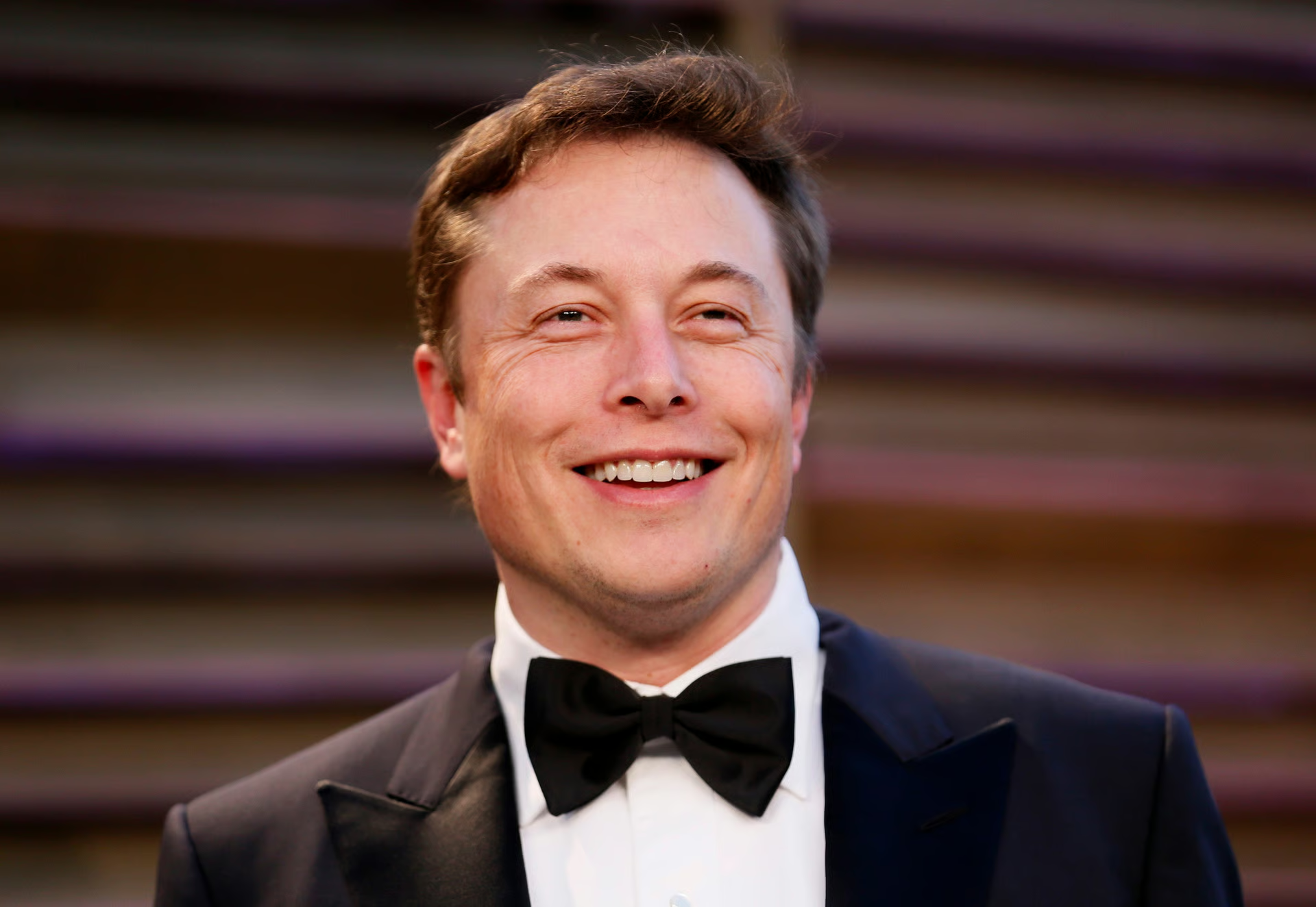
1. Elon Musk
Wealth Source:
Tesla, SpaceX, xAI
Core Industry:
Electric Vehicles, Aerospace, Artificial Intelligence
Wealth Structure:
Highly concentrated in a few high-volatility technology assets.
Trend Forecast:
Musk’s wealth is highly dependent on market expectations. If narratives around AI or autonomous driving strengthen, his assets still have room to rise. However, if regulation weakens or market confidence wanes, his ranking could fall just as quickly. He represents the most extreme case of coexisting potential and risk on the list.
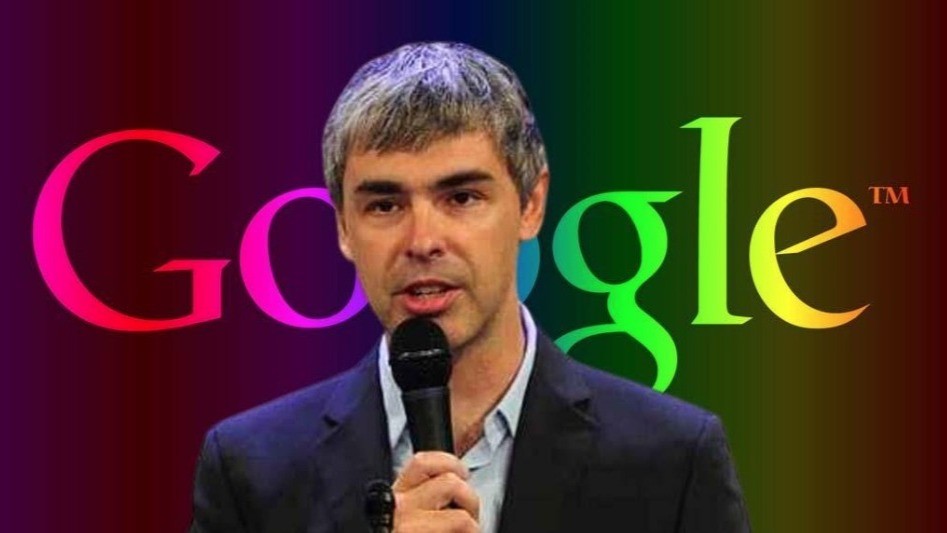
2. Larry Page
Wealth Source:
Alphabet (Google)
Core Industry:
Search, Advertising, AI Foundation Models
Wealth Structure:
Mature platform + Long-term cash flow.
Trend Forecast:
With the deepening of AI search and cloud computing, Page’s wealth tends towards stable growth. He does not rely on the visibility of personal decision-making, representing a typical “platform-based long-term winner.” The probability of significant future fluctuations in his ranking is low.
3. Jeff Bezos
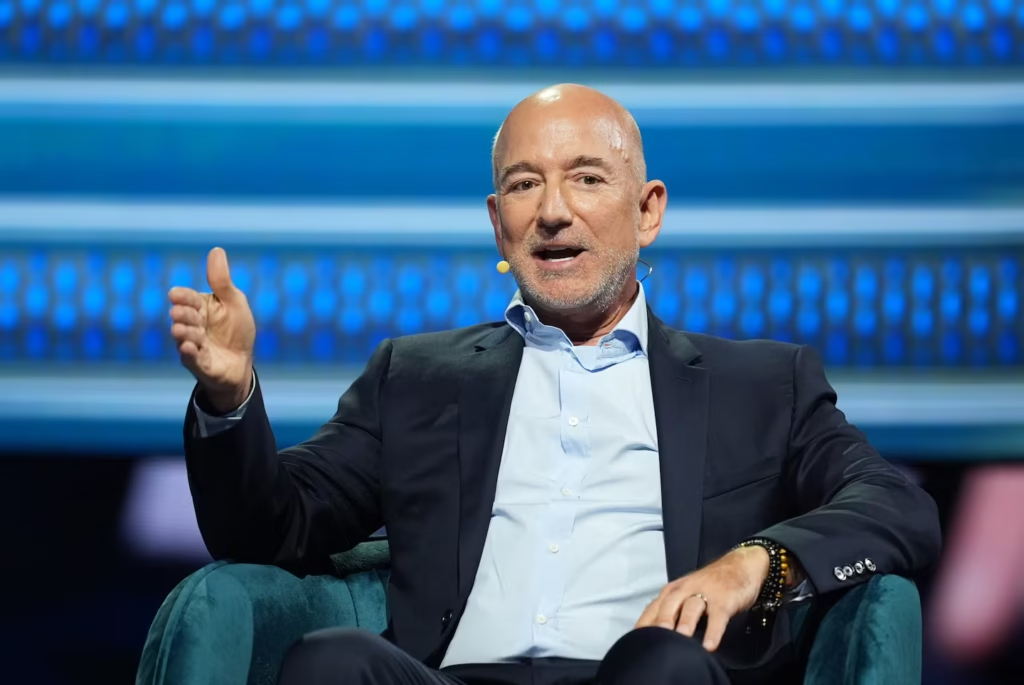
Wealth Source:
Amazon
Core Industry:
E-commerce, Cloud Computing (AWS)
Wealth Structure:
Retail scale + High-profit cloud business.
Trend Forecast:
AWS remains the core profit driver for Amazon. As long as demand for cloud computing continues, Bezos’s wealth will maintain a steady, upward trend, though the possibility of explosive growth is lower than in the early stages.
4. Larry Ellison
Wealth Source:
Oracle
Core Industry:
Enterprise Software, Database, Cloud Services
Wealth Structure:
Traditional software giant + Stable cash flow.
Trend Forecast:
Ellison’s advantage lies in extremely strong customer loyalty. Although growth is limited, his wealth possesses formidable defensive qualities, giving it a high probability of remaining in the top ten long-term.
5. Sergey Brin
Wealth Source:
Alphabet (Google)
Core Industry:
Internet, AI Technology
Wealth Structure:
Similar to Page’s, but more diversified.
Trend Forecast:
Brin’s wealth trajectory is closely tied to Google’s AI strategy. If the efficiency of AI commercialization improves, his net worth still has room for continued growth.
6. Mark Zuckerberg
Wealth Source:
Meta Platforms
Core Industry:
Social Media, Advertising, AI
Wealth Structure:
Driven by platform advertising revenue.
Trend Forecast:
Zuckerberg’s wealth is more cyclical. If AI content recommendations continue to improve advertising efficiency, his assets could still rebound. However, they are significantly influenced by policy and user behavior.
7. Bernard Arnault
Wealth Source:
LVMH
Core Industry:
Luxury Goods, Consumer Brands
Wealth Structure:
Portfolio of brands + Pricing power.
Trend Forecast:
With the premise of the long-term existence of high-end consumption, Arnault’s wealth is the most stable. He is one of the few representatives on the list whose fortune is not dependent on technology cycles.
8. Steve Ballmer
Wealth Source:
Microsoft
Core Industry:
Software, Cloud Ecosystem
Wealth Structure:
Long-term shareholding.
Trend Forecast:
Ballmer’s wealth growth will not be aggressive, but it is also extremely resistant to significant shrinkage, representing a typical “time-compounded wealth” model.
9. Jensen Huang
Wealth Source:
NVIDIA
Core Industry:
GPU, AI Chips
Wealth Structure:
Highly concentrated in AI infrastructure.
Trend Forecast:
If AI continues to expand, Huang could rise further. However, industry competition and policy risks also imply high volatility.
10. Warren Buffett
Wealth Source:
Berkshire Hathaway
Core Industry:
Long-term Investment
Wealth Structure:
Highly diversified.
Trend Forecast:
Buffett’s wealth growth is slowing, but its stability is extremely strong. In the future, it will primarily reflect “preservation rather than expansion.”
Trend Analysis
1. Technology Remains the World’s Primary Engine for Creating Wealth
The current top ten list shows that technology-related wealth still holds absolute dominance. Platform-based companies, chip manufacturers, and cloud computing service providers possess powerful network effects and global scalability. Once technological or ecosystem moats are established, marginal costs drop rapidly, and profits scale with user and computing power growth. This characteristic allows tech companies to consistently command higher valuations in capital markets, keeping their founders and early shareholders at the forefront of wealth rankings for the long term.
2. AI is Accelerating Wealth Concentration, Not Redistribution
Unlike the early internet era, artificial intelligence is not dispersing wealth but rather concentrating it in the hands of a few companies with advantages in computing power, data, and capital. Companies like NVIDIA, Google, and Meta control critical infrastructure, significantly benefiting their founders and core shareholders. In the short term, AI-related wealth is growing extremely fast, but it is also accompanied by higher volatility, a key reason for the frequent changes in the rankings in recent years.
3. Consumption and Investment-Based Wealth Act as “Stabilizers”
Alongside the highly volatile tech wealth, luxury goods and long-term investment-based wealth provide important stability. Represented by Bernard Arnault and Warren Buffett, this wealth path relies on brand power, cash flow, and the power of compound interest over time, rather than technological breakthroughs. This type of wealth grows more slowly but has strong risk resistance, often performing more steadily during economic downturns, acting as a “ballast” in the rankings.
4. Wealth Geography Remains Highly Concentrated in the United States
Despite ongoing globalization, the top ten billionaires are still centered in the United States. This is closely related to the mature capital markets, innovation ecosystem, and venture capital system in the U.S. Even if some companies’ operations are highly international, their financing, listing, and valuation systems still primarily rely on the U.S. market. In the short term, this landscape is unlikely to change fundamentally.
Q&A
Q1: Is the net worth on the list equivalent to disposable cash?
No. The vast majority of wealth exists in the form of stocks or equity. The theoretical valuation is far greater than the amount of cash that could be liquidated immediately.
Q2: Why do these individuals’ rankings change so frequently?
Because their core assets are mostly publicly traded company stocks, whose prices are clearly affected by market sentiment, policy, earnings reports, and macroeconomic conditions.
Q3: Are there people wealthier than those on the list who are not counted?
Possibly. Some private business owners or royal family assets lack public data and are not included in mainstream rankings.
Q4: Why does the technology industry more easily produce ultra-wealthy individuals?
Technology companies have low marginal costs and global scalability. Once successful, the growth rate of profits and valuation far exceeds that of traditional industries.
Q5: Why can luxury goods billionaires remain stable at the top of the list for so long?
Because high-end brands possess pricing power and loyal customer bases, making them relatively less sensitive to economic cycles.
Q6: Will AI bring more new faces into the top ten?
It’s possible, but competition is fierce. Only companies that control core infrastructure or platforms possess the ability to continuously generate such wealth.
Q7: Is there systemic risk to these billionaires’ wealth?
Yes. Policy changes, technological substitution, geopolitics, and market bubbles can all significantly impact their wealth.
Q8: What can ordinary people learn from these rankings?
The greatest value of the list is to reveal long-term trends: choosing highly scalable industries and valuing the power of compound interest over time is more important than short-term speculation.
Conclusion
The world’s ten richest individuals embody the result of industrial choice and the accumulation of time. Technology platforms enable rapid growth, while brands and investment provide stable returns. The rankings will change, but the structural logic behind the wealth is relatively clear. Understanding this logic is more important than remembering the specific numbers.
Data Sources
Bloomberg Billionaires Index
https://www.bloomberg.com/billionaires
Forbes Real-Time Billionaires
https://www.forbes.com/real-time-billionaires/
Statista – Billionaires & Wealth
https://www.statista.com/topics/2229/billionaires/