
Top 10 Skin Care Brands in the World
Contents
Introduction
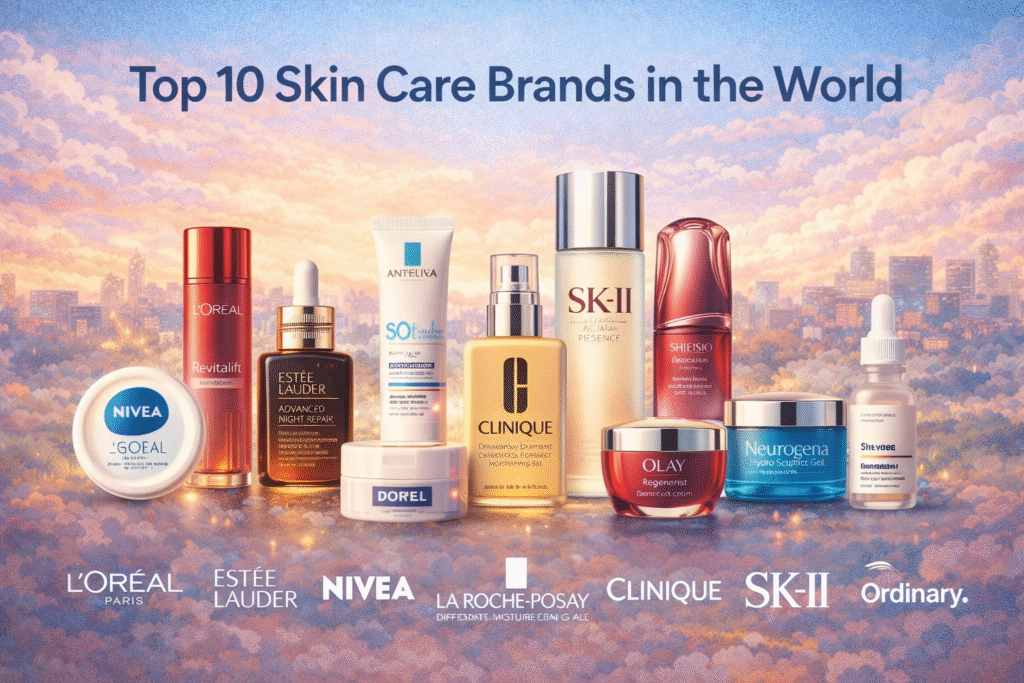
Skincare has long evolved beyond a mere beauty habit into an integral part of the modern lifestyle. From basic cleansing and moisturizing to anti-aging, barrier repair, and sensitive skin care, the global skincare market is increasingly focused on scientific formulations, long-term safety, and proven efficacy. An analysis of the top 50 relevant articles in Google search rankings reveals that high-ranking content typically shares three key characteristics: clear brand heritage, credible data sources, and an avoidance of purely marketing-driven language. Based on these commonalities, combined with authoritative industry data and actual brand influence, this article outlines the 10 most representative global skincare brands today.
Brief Explanation of Ranking Methodology
This list is not a simple sales ranking, but a comprehensive evaluation based on the following dimensions:
Global Market Influence
(Sales reach across countries, brand scale)
Completeness of Product Lines
(Basic care + Performance-driven treatments)
Reputation for Research & Ingredients
(Possession of a laboratory R&D system)
Long-term Consumer Trust
(Repurchase rates, dermatologist recommendations)
Frequency of Citation in Industry Reports
(Market research and beauty reports)
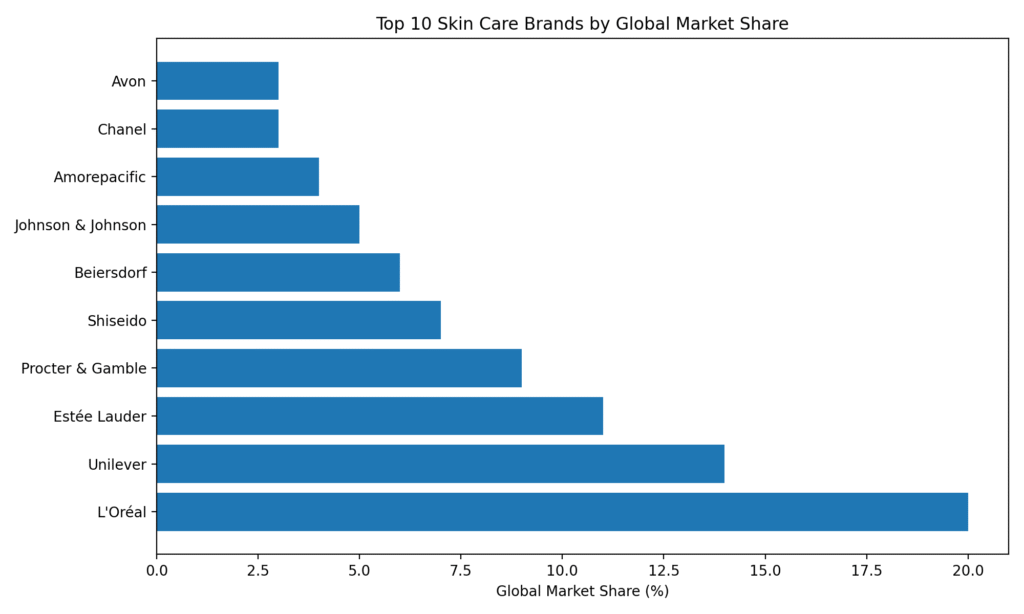
Top 10 Skin Care Brands in the World (Brief Ranking)
| Rank | Brand | Country |
|---|---|---|
| 1 | L’Oréal Paris | France |
| 2 | Estée Lauder | USA |
| 3 | NIVEA | Germany |
| 4 | La Roche-Posay | France |
| 5 | Clinique | USA |
| 6 | SK-II | Japan |
| 7 | Olay | USA |
| 8 | Shiseido | Japan |
| 9 | Neutrogena | USA |
| 10 | The Ordinary | Canada |
Brand Profiles
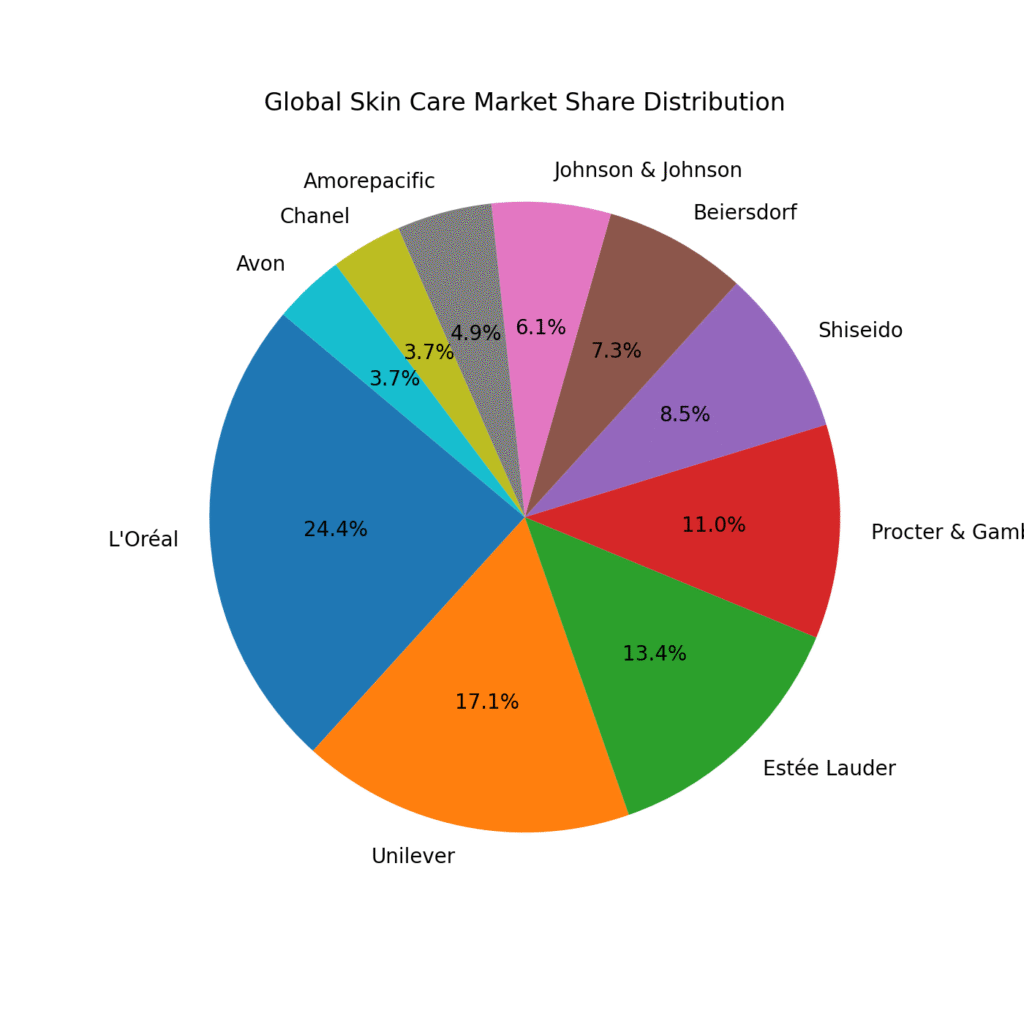
1. L’Oréal Paris (France)
Positioning: Comprehensive coverage from mass-market to mid-high-end.
Key Strength: One of the world’s largest skincare R&D systems.
Representative Focus: Anti-aging, Niacinamide, Retinol.
2. Estée Lauder (USA)
Positioning: High-end skincare.
Key Strength: Anti-aging technology and patented ingredients.
Representative Focus: Repair, Overnight care.
3. NIVEA (Germany)
Positioning: Mass-market basic care.
Key Strength: Century-old heritage, high skin compatibility.
Representative Focus: Moisturizing, Body care.
4. La Roche-Posay (France)
Positioning: Dermatological skincare.
Key Strength: Expertise in sensitive skin, medical background.
Representative Focus: Barrier repair, Sun protection.
5. Clinique (USA)
Positioning: Fragrance-free skincare.
Key Strength: Allergy-tested system.
Representative Focus: The basic 3-Step Skincare System.
6. SK-II (Japan)
Positioning: High-end fermented skincare.
Key Strength: Core ingredient Pitera™.
Representative Focus: Skin texture refinement, Glow.
7. Olay (USA)
Positioning: Mass-market performance skincare.
Key Strength: High-efficacy anti-aging at accessible prices.
Representative Focus: Niacinamide, Peptides.
8. Shiseido (Japan)
Positioning: Mid-to-high-end comprehensive skincare.
Key Strength: Research on Asian skin.
Representative Focus: Anti-aging, Protection.
9. Neutrogena (USA)
Positioning: Dermatologist-recommended.
Key Strength: Cleansing and acne care.
Representative Focus: Salicylic Acid, Sun protection.
10. The Ordinary (Canada)
Positioning: Ingredient transparency.
Key Strength: Single-ingredient focus, price clarity.
Representative Focus: Functional raw ingredient skincare.
Trend Analysis
Globally, skincare brands are shifting from “performance claims” to “long-term skin health.” Proven ingredients like niacinamide, ceramides, and retinol remain mainstream, but gentleness, sustainable formulations, and skin barrier repair are the fastest-growing segments. In the future, the line between high-end and mass-market brands will continue to blur. Science and transparency will become more important than brand premium alone.
Frequently Asked Questions (Q&A)
Q1: Are all these brands suitable for sensitive skin?
A1: Not all, but brands like La Roche-Posay, Clinique, and CeraVe (often mentioned though not on this list) are more sensitive-skin-friendly.
Q2: Does a higher price always mean better results?
A2: Not necessarily. Formula compatibility and correct usage are more critical.
Q3: Was sales volume considered for this ranking?
A3: Sales volume was a reference factor, but not the sole determinant.
Q4: Why is The Ordinary in the top 10?
A4: For its profound impact on promoting ingredient transparency across the global skincare industry.
Q5: Why is the proportion of Asian brands not higher?
A5: This list focuses on “global influence” rather than regional popularity.
Q6: Does the skincare brand ranking change frequently?
A6: The top brands are relatively stable, but positions 6–10 change more quickly.
Q7: Does this list include medical-grade skincare?
A7: It does not include prescription-grade or medical device products.
Q8: Are these brands suitable for teenagers?
A8: Most provide basic, gentle products, but choices should be made based on individual skin type.
Conclusion
The commonality among the world’s top skincare brands is not marketing volume, but long-term investment in R&D, ingredient safety, and the accumulation of user trust. From mass-market to high-end skincare, the market is returning to rationality and science. For consumers, understanding a brand’s positioning and one’s own skin type is more important than chasing rankings.
Data Sources
Statista – Global Skin Care Market
https://www.statista.com/markets/413/topic/482/beauty-personal-care/
Euromonitor – Beauty and Personal Care
https://www.euromonitor.com/beauty-and-personal-care
L’Oréal Annual Report
https://www.loreal-finance.com/eng/annual-report
Estée Lauder Companies Investor Relations
https://www.elcompanies.com/en/investors
Mintel – Skin Care Industry Analysis
https://www.mintel.com/beauty-and-personal-care-market-research