
Top 10 Sports Countrie in the World
Contents
Introduction
Sports are not just about winning or losing; they are a vital indicator of national health, cultural vitality, and social participation. From morning runs in the park to Olympic podiums, every drop of sweat reflects a nation’s spirit. This article selects ten countries with the greatest influence on the global sports stage and explores their prowess through three key dimensions: mass sports participation + international competitive performance + sports infrastructure, offering you a comprehensive view of what makes a sports powerhouse.
Methodology
Dimension 1: Mass Sports Participation Rate
Refers to the proportion of adults or youth who regularly participate in sports activities.
Dimension 2: International Competitive Performance
Includes total medal counts or medals per capita from events like the Olympics and World Championships.
Dimension 3: Sports Infrastructure and Institutional Support
Encompasses the density of sports venues, national funding, club coverage, and more. Data sources include reports from organizations like Bloomberg, international sports index studies, and national sports statistics.
Ranking (In Order)
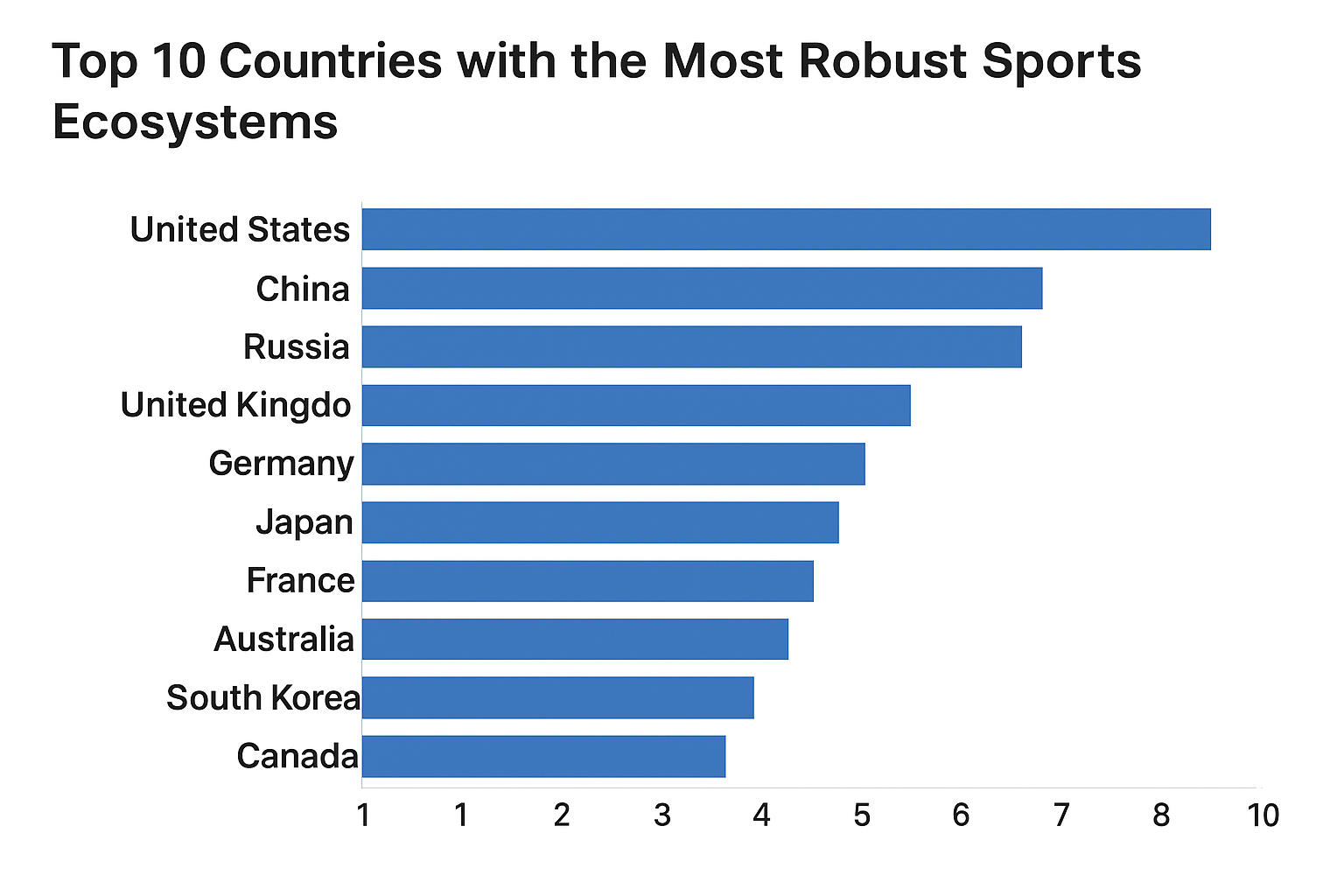
- 🇺🇸 United States
- 🇨🇳 China
- 🇷🇺 Russia
- 🇬🇧 United Kingdom
- 🇩🇪 Germany
- 🇯🇵 Japan
- 🇫🇷 France
- 🇦🇺 Australia
- 🇰🇷 South Korea
- 🇨🇦 Canada
Country Profiles (Detailed by Three Dimensions for Each Country)
🇺🇸 United States
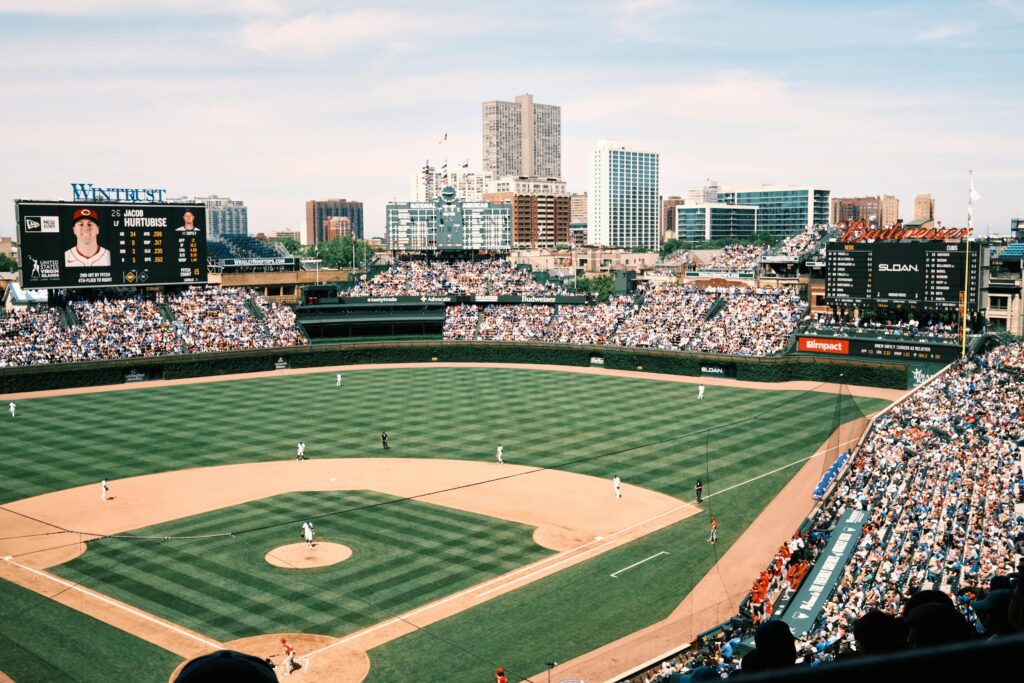
Participation Rate: While not the highest in participation rankings, the sports industry is extremely developed.
Competitive Performance: Consistently leads in Olympic medal counts for years, with a highly commercialized sports sector.
Infrastructure and Systems: Boasts the world’s largest number of standard sports venues, a comprehensive professional league system, and a powerful school sports system.
🇨🇳 China
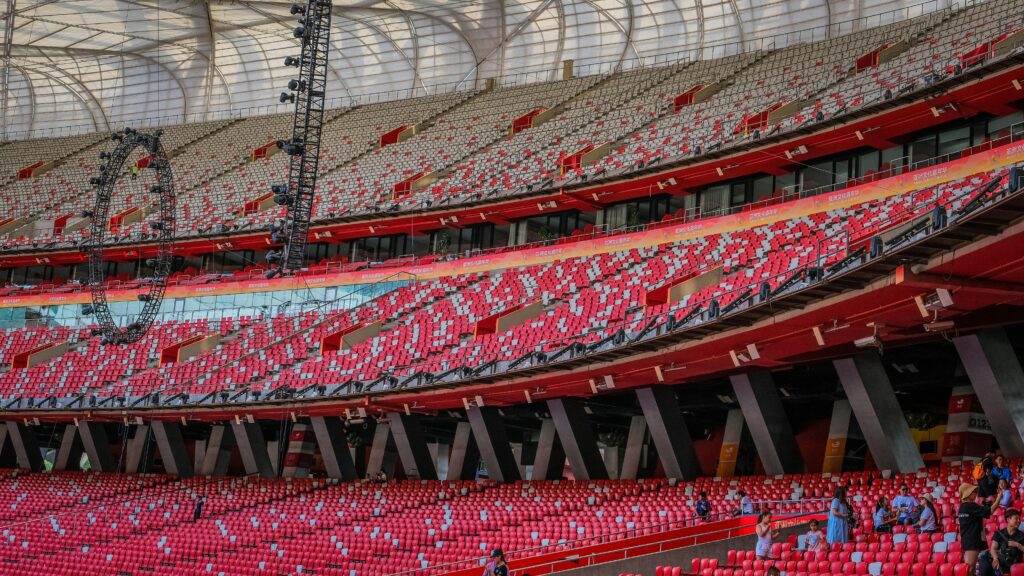
Participation Rate: The government has increased investment in national fitness in recent years, leading to rising sports participation.
Competitive Performance: Rapid growth in Summer and Winter Olympic medals, reflecting a significant sports powerhouse strategy.
Infrastructure and Systems: Rapid expansion of large sports venues, youth training systems, and fast integration of sports and technology.
🇷🇺 Russia
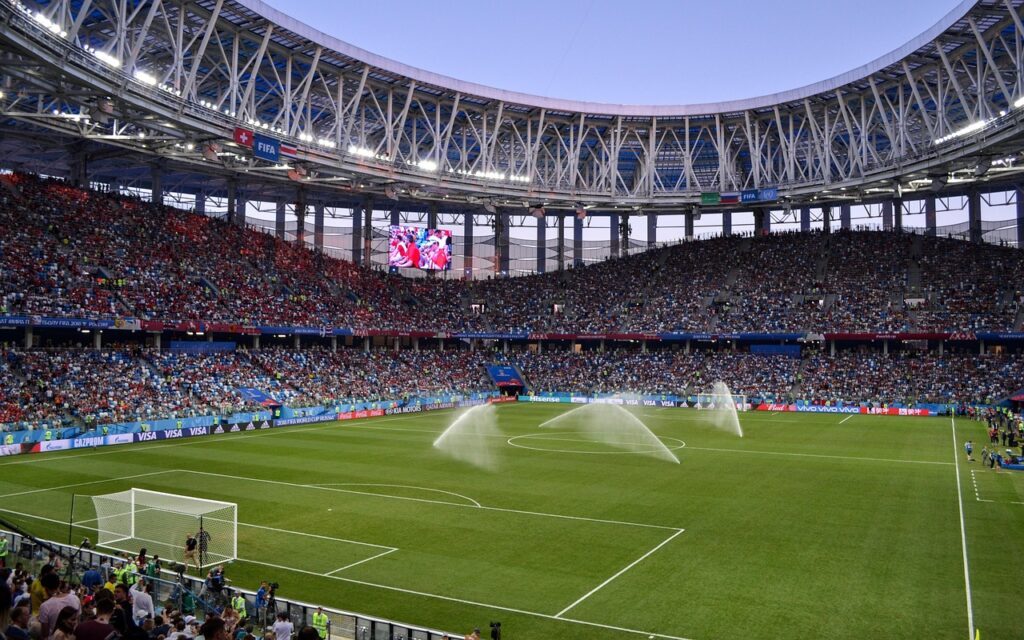
Participation Rate: High participation in winter sports and ice-snow activities.
Competitive Performance: Traditional strengths in multiple Summer and Winter Olympic events.
Infrastructure and Systems: Highly systematic national sports structure, with a well-developed system from youth development to national teams.
🇬🇧 United Kingdom
Participation Rate: Deep-rooted sports culture and tradition of grassroots participation.
Competitive Performance: Strong performance in world-class events and medal counts, with a developed sports industry.
Infrastructure and Systems: The 2012 London Olympics spurred nationwide facility upgrades, with sound youth training and community sports systems.
🇩🇪 Germany
Participation Rate: Broad mass sports participation and a mature club system.
Competitive Performance: Consistently ranks high in Olympic medal totals, with strength in traditional sports.
Infrastructure and Systems: Long-standing development in sports science, professional sports, and club systems.
🇯🇵 Japan
Participation Rate: Enhanced national fitness awareness post-Tokyo Olympics.
Competitive Performance: Steadily improving medal counts, with growing international competitiveness in many events.
Infrastructure and Systems: Modern sports facilities widespread in high-density urban areas, blending traditional and modern sports culture.
🇫🇷 France
Participation Rate: Rich sports culture with widespread mass participation.
Competitive Performance: World-class performance in events like the Tour de France, cycling, and fencing.
Infrastructure and Systems: A well-established network of sports clubs nationwide, supporting diverse sports.
🇦🇺 Australia
Participation Rate: Studies show a mass participation rate can reach up to 84%.
Competitive Performance: World-leading in swimming, cricket, tennis, and rugby.
Infrastructure and Systems: Excellent weather conditions, strong community sports culture, and extensive sports facilities.
🇰🇷 South Korea
Participation Rate: Steady sports participation, especially among youth and in emerging sports like e-sports.
Competitive Performance: Historically excellent in archery, taekwondo, and short-track speed skating.
Infrastructure and Systems: Government promotes the integration of “national sports + sports tourism,” with modernized facilities.
🇨🇦 Canada
Participation Rate: Strong sports participation culture, particularly in winter sports.
Competitive Performance: Traditional strength in ice hockey, skiing, and curling.
Infrastructure and Systems: High national investment in sports, with close integration of clubs and communities.
Why Do These Countries Rank at the Top?
Three Key Drivers:
High Levels of Mass Participation — When sports become the norm for most people, the sports system gains a solid foundation.
International Competitive Success — Medals and world championships reflect a country’s institutionalization and talent cultivation in sports.
Comprehensive Infrastructure and Institutional Support — From community venues and school sports mechanisms to professional leagues and national team training bases, these are indispensable for a sports powerhouse.
Trend Prediction: The Landscape of Sports Powerhouses in the Next 5 Years
Continued Rise of Asian Countries: China, Japan, and South Korea will see sustained growth in participation, facilities, and competitiveness.
Deeper Integration of Sports and Health: Focus shifts beyond medals to emphasize national health, widespread sports participation, and social involvement.
Accelerated Integration of Technology and Sports: Data analysis, sports technology, and virtual training become new advantages.
Multipolar Global Sports Market: Sports powerhouses are no longer limited to Europe and America; more countries join the ranks.
Conclusion
A true sports powerhouse is not just about the glory on the podium, but also about the figures on the morning playground, the clubs in schools, the tracks in communities, and the sports habits of the entire population. We hope this article helps you appreciate the national strength behind sports and inspires you to participate and run with passion.
Data Sources
LiveFootballTickets, “International Sporting Index – The Sportiest Countries Around”.(turn0search16)
WorldExcellence, “The World Sportiest Countries”.(turn0search13)
MyProtein, “We Reveal the World’s Sportiest Countries”.(turn0search6)