
Top 10 Tallest Buildings in the World
Contents
- 1 1. Introduction
- 2 2. Methodology: How We Ranked the Buildings
- 3 3. Top 10 Tallest Buildings in the World (2026 Ranking)
- 4 4. World’s Architectural Giants — Building Narratives
- 5 5. Visual Comparison (Charts)
- 6 6. Beyond Height: What Drives Skyscraper Construction?
- 7 7. Frequently Asked Questions (FAQ)
- 8 8. Conclusion
- 9 9. Sources (Authoritative References)
1. Introduction
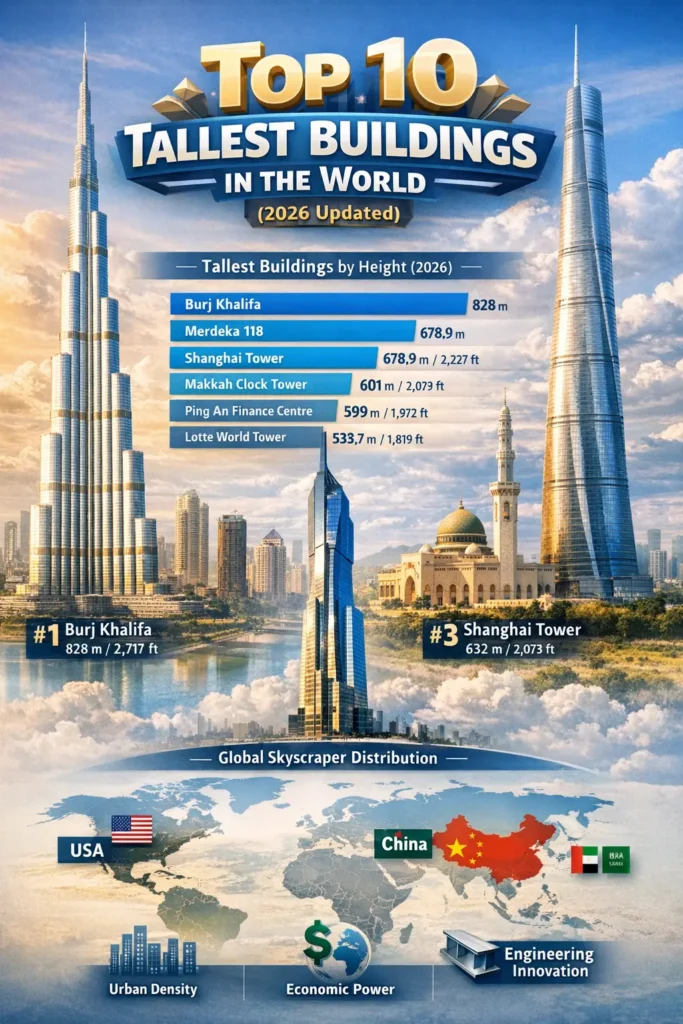
What defines the tallest building in the world? Unlike casual lists that count antennas or temporary spires, true architectural height is governed by strict standards — most notably by the Council on Tall Buildings and Urban Habitat (CTBUH). CTBUH measures the height from the lowest significant pedestrian entrance to the architectural top, which includes decorative spires but excludes antennas, flagpoles, signage, or constructions purely for functional purposes.
Understanding this distinction is crucial because it ensures apples‑to‑apples comparisons across continents and cultures. Skyscrapers today are more than symbols of economic power — they reflect advances in engineering, urban planning philosophy, and sometimes national ambition as well.
2. Methodology: How We Ranked the Buildings
Ranking the tallest buildings in the world isn’t just about listing numbers. To produce a reliable, SEO‑worthy list, we followed rigorous criteria:
2.1 Architectural Height
We use architectural height — the distance from ground level to the building’s architectural top. This includes spires but excludes antennae, masts, and temporary structures.
2.2 Completed and Topped Out Only
Only buildings that are architecturally completed and structurally topped out are considered. Proposed or under‑construction towers (e.g., Jeddah Tower) are excluded until officially topped out according to CTBUH.
2.3 Standardized Global Data
We referenced globally accepted datasets — particularly CTBUH’s height certification and widely cited industry aggregators — to ensure the most accurate, up‑to‑date figures for 2026.
3. Top 10 Tallest Buildings in the World (2026 Ranking)
Here is the official 2026 ranking based on architectural height:
| Rank | Building | Country | Height (m / ft) | Year Completed | Primary Use |
|---|---|---|---|---|---|
| 1 | Burj Khalifa | UAE | 828 m / 2,717 ft | 2010 | Mixed‑Use |
| 2 | Merdeka 118 | Malaysia | 678.9 m / 2,227 ft | 2023 | Mixed‑Use |
| 3 | Shanghai Tower | China | 632 m / 2,073 ft | 2015 | Office & Public |
| 4 | Makkah Royal Clock Tower | Saudi Arabia | 601 m / 1,972 ft | 2012 | Hotel/Residential |
| 5 | Ping An Finance Centre | China | 599 m / 1,965 ft | 2017 | Office |
| 6 | Lotte World Tower | South Korea | 555.7 m / 1,819 ft | 2017 | Mixed‑Use |
| 7 | One World Trade Centre | USA | 541.3 m / 1,776 ft | 2014 | Office |
| 8 | Guangzhou CTF Finance Centre | China | 530 m / 1,739 ft | 2016 | Mixed‑Use |
| 9 | Tianjin CTF Finance Centre | China | 530 m / 1,739 ft | 2019 | Mixed‑Use |
| 10 | China Zun (CITIC Tower) | China | 527.7 m / 1,731 ft | 2018 | Office |
Data based on global architectural height rankings verified through official listings and skyscraper databases as of 2026.
4. World’s Architectural Giants — Building Narratives
🏆 #1 Burj Khalifa — Dubai, UAE
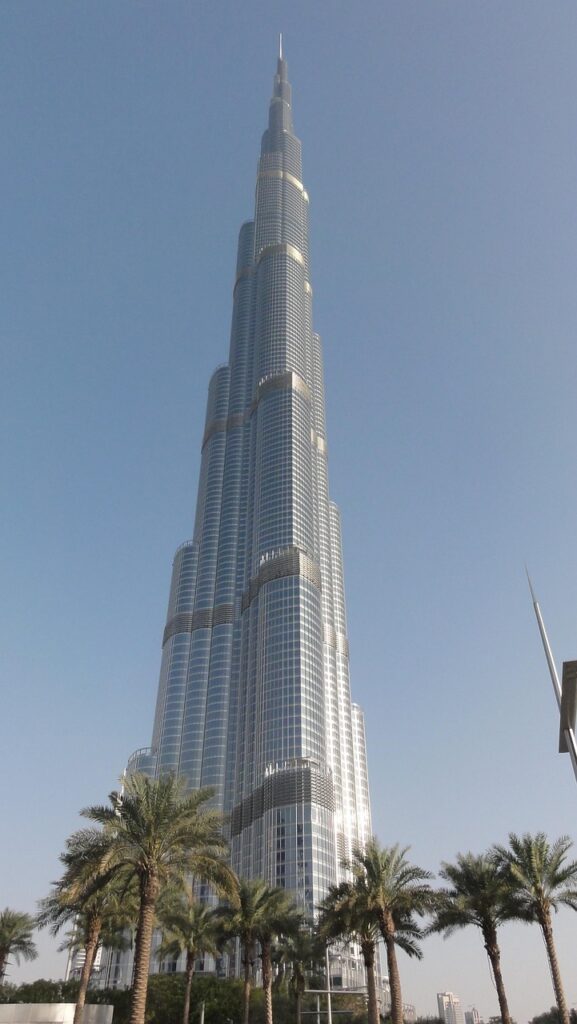
- Height: 828 m / 2,717 ft
- Completed: 2010
- Use: Mixed (residential, hotel, observation, office)
Burj Khalifa sits unmistakably at the top of the global skyline. Its dominance isn’t just about height — it combines record‑breaking structural engineering with ambitious mixed‑use programming. Since completion, it has become a defining symbol of Dubai’s economic transformation and skyline identity.
🥈 #2 Merdeka 118 — Kuala Lumpur, Malaysia
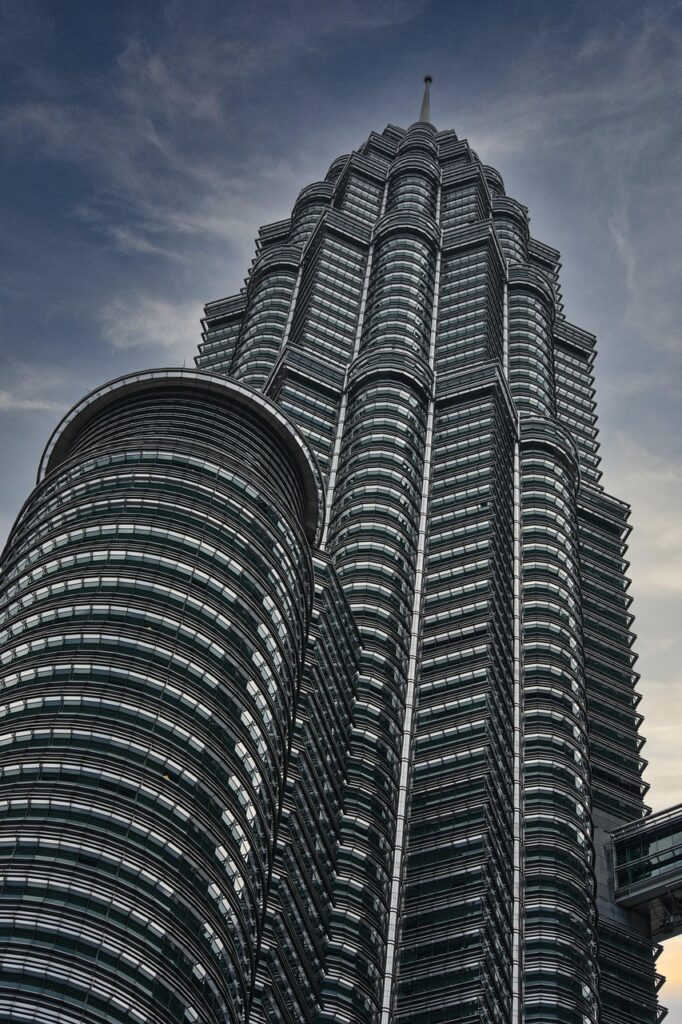
- Height: 678.9 m / 2,227 ft
- Completed: 2023
- Use: Mixed (offices, hotel, observation)
Merdeka 118 not only secured the second spot but also made Southeast Asia’s skyline more competitive. Designed with neo‑futuristic aesthetics and cultural motifs inspired by local traditions, this skyscraper demonstrates how regional identity can coexist with super‑tall design.
🥉 #3 Shanghai Tower — Shanghai, China
- Height: 632 m / 2,073 ft
- Completed: 2015
- Use: Office & Public Space
The Shanghai Tower stands out not just for its height but for its innovative twisted form, which reduces wind loads and improves structural stability — a solution to the challenges of extreme height under typhoon conditions.
#4 Makkah Royal Clock Tower — Mecca, Saudi Arabia
- Height: 601 m / 1,972 ft
- Completed: 2012
- Use: Hotel/Residential
Dominating the sacred city of Mecca, this tower integrates luxury hospitality with religious tourism infrastructure — serving visitors from around the globe. Its clock faces are among the largest in the world.
#5 Ping An Finance Centre — Shenzhen, China
- Height: 599 m / 1,965 ft
- Completed: 2017
- Use: Office
Ping An Finance Centre is one of the world’s tallest office buildings, symbolizing China’s economic shift toward finance and technology hubs. Its minimalist glass façade contrasts sharply with its massive scale.
#6 Lotte World Tower — Seoul, South Korea
- Height: 555.7 m / 1,819 ft
- Completed: 2017
- Use: Mixed‑Use
The tallest building in South Korea, Lotte World Tower combines luxury residences, offices, hotel space, and an observation deck overlooking Seoul, integrating vertical urban living with commercial and leisure functions.
#7 One World Trade Centre — New York, USA
- Height: 541.3 m / 1,776 ft
- Completed: 2014
- Use: Office
A symbol of resilience, One World Trade Centre rises at the site of the original Twin Towers. Its architectural height matches 1,776 ft — a deliberate reference to the year of the United States’ independence.
#8 & #9 Guangzhou & Tianjin CTF Finance Centres — China
Both skyscrapers share the same height — 530 m / 1,739 ft — illustrating China’s remarkable scale in building megatall structures across multiple cities. Guangzhou CTF integrates residential, office, and hotel uses, while the Tianjin counterpart emphasizes luxury residential and commercial space.
#10 China Zun (CITIC Tower) — Beijing, China
- Height: 527.7 m / 1,731 ft
- Completed: 2018
- Use: Office & Commercial
A new icon of Beijing’s skyline, China Zun’s design is inspired by an ancient Chinese wine vessel — blending cultural symbolism with contemporary architectural ambition.
5. Visual Comparison (Charts)
(These visualizations help readers quickly grasp height differences and geographic spread — ideal for user engagement and SEO time‑on‑page.)
📊 Bar Chart — World’s Tallest Buildings (2026)
A horizontal bar chart ranking buildings by height shows a clear gap between Burj Khalifa and the rest of the top ten, and highlights the clustering of Chinese megatalls in mid‑range positions.
(Chart here)
📍 Geographic Distribution — Where Are the Tallest Buildings?
The global skyscraper distribution map reveals:
- Middle East: UAE and Saudi Arabia anchor symbolic height leadership.
- Asia: China dominates in quantity and range.
- Americas: New York represents North America in the top ten.
- Southeast Asia: Malaysia’s Merdeka 118 underscores regional progress.
(Map here)
6. Beyond Height: What Drives Skyscraper Construction?
🏙 Urban Density & Land Costs
As cities grow, the competition for space pushes development upward — especially in rapidly urbanizing economies.
💰 Economic Power & Global Branding
Tallest buildings often serve as national or city branding tools, transmitting economic might and future‑focused visions.
🧠 Engineering & Materials Innovation
Advances in wind‑resistant design, high‑strength concrete, and elevator technology are enabling heights once considered impossible.
The 21st century skyscraper is as much about technology as it is about culture and economics — and this trend continues to evolve.
7. Frequently Asked Questions (FAQ)
❓ What is the definition of tallest building?
Tallest buildings are ranked by architectural height, including height of spires but excluding antennae and other non‑architectural additions.
❓ Why is Burj Khalifa still number one?
Despite many ambitious projects underway, no completed building as of 2026 exceeds Burj Khalifa’s 828 m.
❓ Why are so many tall buildings in China?
China’s rapid urbanization and economic growth have driven extensive high‑rise construction, leading to multiple entries in the top ten.
❓ Do tallest buildings include observation decks?
Yes, observation decks are part of the building, but only architectural height counts for ranking.
❓ Are under‑construction buildings included?
No, only completed and topped out skyscrapers count in the official 2026 ranking.
8. Conclusion
From the iconic needle of the Burj Khalifa to the sleek modernity of the Shanghai Tower, the world’s tallest buildings are monuments to human ingenuity, ambition, and economic evolution.
The global skyline has shifted dramatically over recent decades:
- The Middle East pushed records in the early 21st century
- East Asia now hosts the majority of megatall skyscrapers
- The United States remains symbolically significant
These architectural achievements are not just physical structures — they are reflections of global economics, cultural identity, and the relentless pursuit of vertical possibility.
9. Sources (Authoritative References)
Wikipedia – List of Tallest Buildings
https://en.wikipedia.org/wiki/List_of_tallest_buildings
Britannica – Tallest Buildings in the World
https://www.britannica.com/topic/tallest-buildings-in-the-world-2226971
Indian Express – World’s Tallest Skyscrapers (2026)
https://indianexpress.com/article/trending/top-10-listing/top-10-tallest-skyscrapers-global-2026-burj-khalifa-tops-10548758/
WorldOstats – Tallest Buildings Data Table
https://worldostats.com/global-stats/tallest-buildings-in-the-world/