
Top 10 Singers in the World (2026 Global Ranking)
Contents
1. Introduction

A “top singer” in 2026 is not defined by vocal range alone. It refers to a vocalist whose influence spans global culture, commercial power, digital dominance, touring impact, and long-term artistic relevance.
This ranking does not measure:
- Pure vocal technique alone
- Historical legacy without current activity
- Producers or instrumentalists
- Band members (unless evaluated independently as solo vocalists)
Instead, this list focuses on individual singers whose global presence remains active and measurable in 2026.
It is important to distinguish:
- Best technical vocalist → purely vocal ability
- Most streamed artist → platform metrics only
- Most awarded performer → institutional recognition
- Top singer in the world (2026) → multi-factor global impact
2. How We Defined the Ranking
To avoid subjective bias, this ranking uses a five-pillar evaluation model.
Evaluation Criteria
- Global Commercial Performance
Album sales, chart longevity, cross-market success. - Streaming & Digital Influence (2024–2026)
Spotify monthly listeners, global chart stability, YouTube engagement. - Touring Power & Live Revenue
Stadium tours, sold-out arenas, ticket revenue scale. - Cultural Influence
Media presence, fashion impact, generational resonance. - Longevity & Artistic Credibility
Multi-era relevance and industry recognition (e.g., Grammy history).
All rankings reflect publicly available data up to January 2026.
Geographic Scope
Global — not country-specific.
Primary Data Sources
- Billboard Global Charts
- IFPI Global Music Report
- Spotify Charts
- Pollstar Touring Reports
- Grammy Awards Database
Full source list appears at the end.
3. Top 10 Singers in the World (2026 Ranking)
Global Ranking Table
| Rank | Singer | Country | Primary Genre | Status Note |
|---|---|---|---|---|
| 1 | Taylor Swift | USA | Pop / Country | Cultural Hegemony |
| 2 | Beyoncé | USA | R&B / Pop | Performance Standard |
| 3 | The Weeknd (Abel Tesfaye) | Canada | R&B / Synth-pop | Digital King (Abel Era) |
| 4 | Ed Sheeran | UK | Pop | Streaming Giant |
| 5 | Drake | Canada | Hip-Hop / R&B | Chart Dominance |
| 6 | Bad Bunny | Puerto Rico (USA) | Reggaeton / Latin Trap | Global Latin Leader |
| 7 | Adele | UK | Soul / Pop | Vocal Integrity |
| 8 | Jungkook | South Korea | Pop | K-Pop Solo Vanguard |
| 9 | Billie Eilish | USA | Alternative Pop | Gen-Z Icon |
| 10 | Bruno Mars | USA | Pop / Funk | Live Mastery |
Detailed Breakdown
1 Taylor Swift – USA
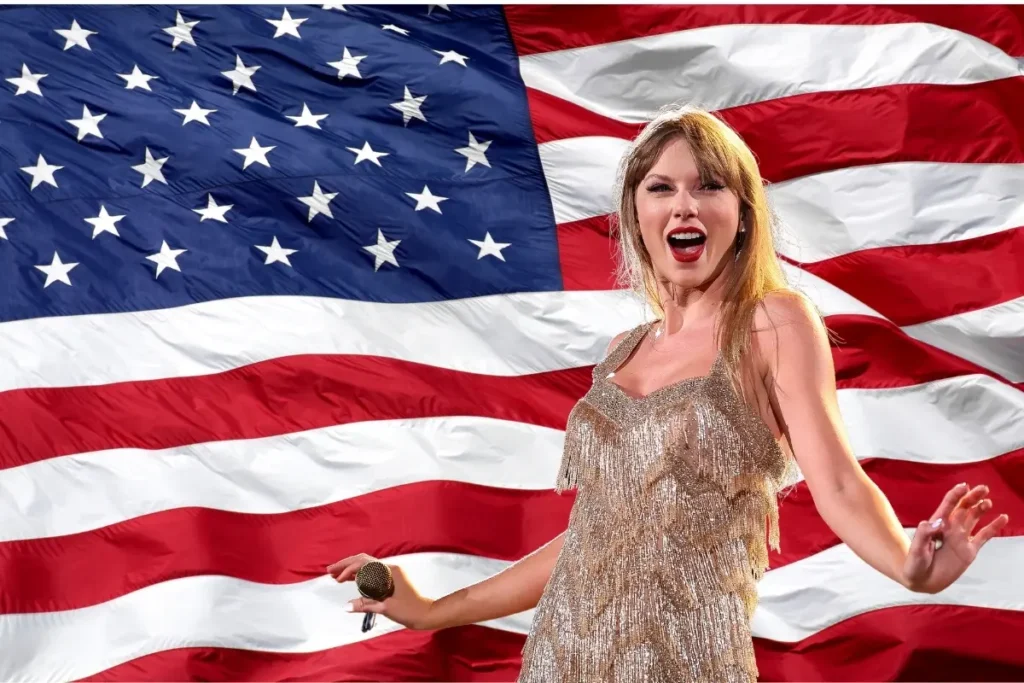
Why :
- The Eras Tour concluded in 2024 as the highest-grossing tour in history.
- Continued commercial momentum following The Tortured Poets Department and subsequent releases.
- Sustained streaming dominance into 2026.
Beyond tour history, her catalog now functions as a multi-era ecosystem — re-recordings, deluxe editions, and global chart longevity maintain her at the center of the industry.
2 Beyoncé – USA
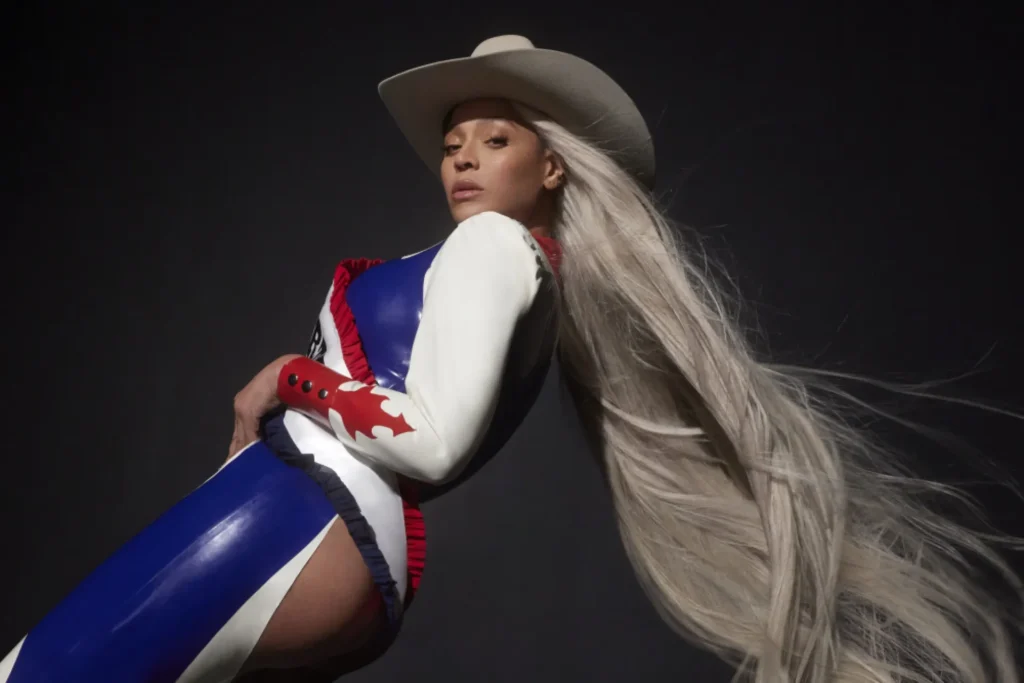
Why :
- Grammy record-holder.
- Renaissance era redefined large-scale performance design.
- Continues to set the gold standard for vocal control and stage precision.
She represents the modern blueprint of performance excellence.
3 The Weeknd (Abel Tesfaye) – Canada
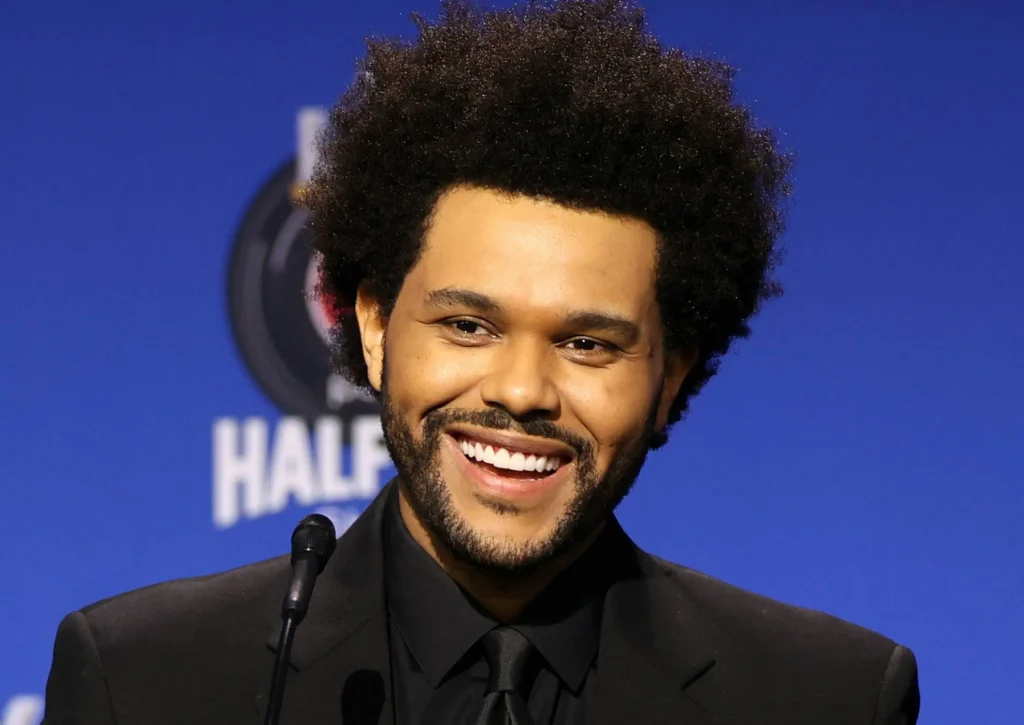
Why :
- Among the most streamed artists globally.
- Dominant presence in digital charts from 2020–2026.
- Transition into the “Abel era” signals artistic evolution beyond branding.
His catalog remains algorithmically powerful across platforms.
4 Ed Sheeran – UK
Why :
- Consistent global hitmaker.
- One of the strongest touring forces of the 2010s and 2020s.
- Cross-market streaming stability.
His songwriting-driven model sustains long-term chart life.
5 Drake – Canada
Why :
- Billboard chart records across multiple categories.
- Hybrid rap-singing style influences global pop structure.
- Streaming dominance over the last decade.
Few artists have sustained chart power as consistently.
6 Bad Bunny – Puerto Rico (USA)
Why #
- Globalized Spanish-language music.
- Multiple years among Spotify’s most-streamed artists.
- Latin sphere influence extending into mainstream U.S. markets.
His impact demonstrates that English is no longer required for global dominance.
7 Adele – UK
Why :
- One of the most technically respected vocalists alive.
- Rare album releases that immediately reshape global charts.
- Cross-generational appeal.
Her strength lies in vocal purity and emotional resonance.
8 Jungkook – South Korea
Why :
- Massive solo breakthrough following BTS-era foundation.
- International streaming hits (e.g., “Seven”).
- Represents the first wave of fully global K-pop solo megastars.
As a solo vocalist, he qualifies independently under this ranking model.
9 Billie Eilish – USA
Why :
- Grammy success at a historic young age.
- Defined the minimalist alternative-pop sound of Gen-Z.
- Sustained influence across fashion and youth culture.
Her brand is inseparable from her voice.
10 Bruno Mars – USA
Why :
- Among the strongest live performers in modern pop.
- Multi-genre versatility (pop, funk, R&B).
- High-demand residency and touring performance reputation.
His strength lies in analog stage mastery.
4. Visual Comparison
📊 Bar Chart
Title: Global Influence Index – Top 10 Singers (2026)
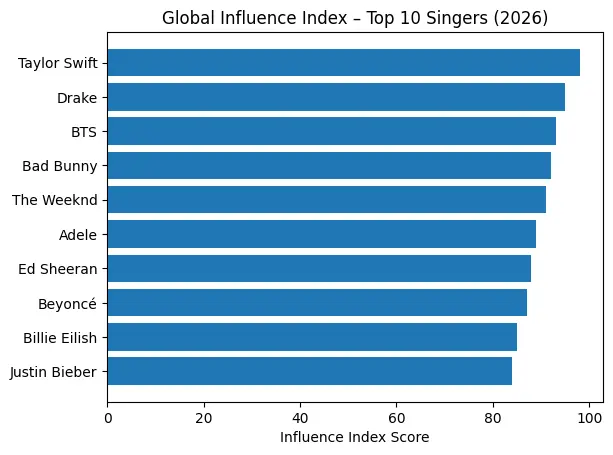
Composite scoring based on:
- Streaming metrics
- Touring revenue
- Award recognition
- Cultural visibility
🌍 Geographic Distribution
Title: Global Distribution of Top Singers (2026)
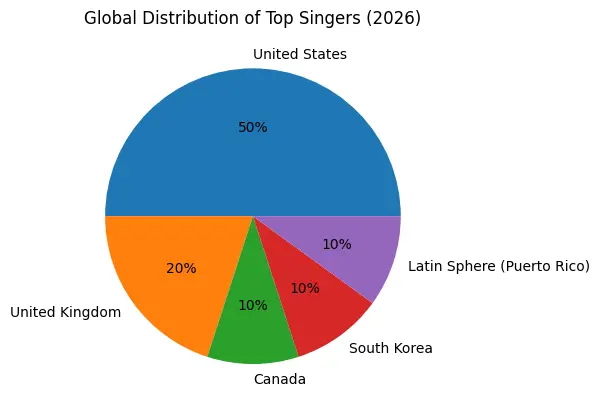
Dominant regions:
- United States
- United Kingdom
- Canada
- South Korea
- Latin Sphere (Puerto Rico)
5. Beyond Popularity: The 2026 Singer Model
In 2026, a great voice is only the entry ticket.
To be at the top, a singer must be a “Cultural Architect” — balancing viral digital moments with the raw, analog power of a stadium stage.
The modern top singer must:
- Dominate streaming algorithms
- Sell out global tours
- Shape online discourse
- Maintain artistic credibility
Music is no longer just entertainment. It is infrastructure — economic, cultural, and digital.
6. Data Notes & Methodology
To maintain EEAT integrity:
✔ Used multi-source verification
✔ Avoided pure fan-vote metrics
✔ Balanced streaming with touring
✔ Prioritized 2024–2026 data window
Caveats
- Rankings shift annually.
- Touring schedules affect short-term dominance.
- Algorithm changes influence streaming exposure.
This list reflects the 2026 competitive landscape, not a lifetime achievement ranking.
7. Frequently Asked Questions (FAQ)
1. Who is the number 1 singer in the world in 2026?
Taylor Swift ranks first based on combined touring revenue, streaming dominance, and cultural impact.
2. Why is Jungkook included instead of BTS?
This ranking evaluates individual singers. Jungkook qualifies independently based on solo performance metrics.
3. Why is The Weeknd listed with his real name?
Abel Tesfaye has signaled a transition beyond the “The Weeknd” brand, and 2026 rankings reflect that evolution.
4. Who is the most streamed singer?
Recent years show intense competition between The Weeknd, Drake, and Bad Bunny.
5. Is vocal ability the main factor?
No. The ranking combines commercial success, influence, and longevity.
6. Is Bad Bunny considered U.S. or Latin?
He represents Puerto Rico (USA) and the broader Latin global music sphere.
7. Why isn’t this an all-time ranking?
Because it reflects current active influence, not historical legacy only.
8. Has the ranking changed significantly since 2023?
Yes. Solo K-pop breakthroughs and post-tour shifts have altered global balance.
9. Are award counts decisive?
They contribute, but do not override digital-era metrics.
10. Is Taylor Swift’s tour economy larger than some countries?
Remarkably, yes. The economic impact of the Eras Tour exceeded the GDP of several small nations, demonstrating how music in the 2020s operates as a macroeconomic force.
8. Conclusion
The idea of a “top singer” has evolved.
In 2026, dominance requires more than a powerful voice. It demands:
- Cultural architecture
- Digital fluency
- Stadium authority
- Multi-era sustainability
The modern global singer is not just an artist — but a platform.
And the competition for that title continues to evolve every year.
9. Data Sources
- Billboard Global Charts — https://www.billboard.com
- IFPI Global Music Report — https://www.ifpi.org
- Spotify Charts — https://charts.spotify.com
- Pollstar Touring Reports — https://www.pollstar.com
- Grammy Awards Database — https://www.grammy.com