
Top 10 Countries with most Volcanoes in the World
Contents
Introduction — When the Earth Breathes, the World Shakes
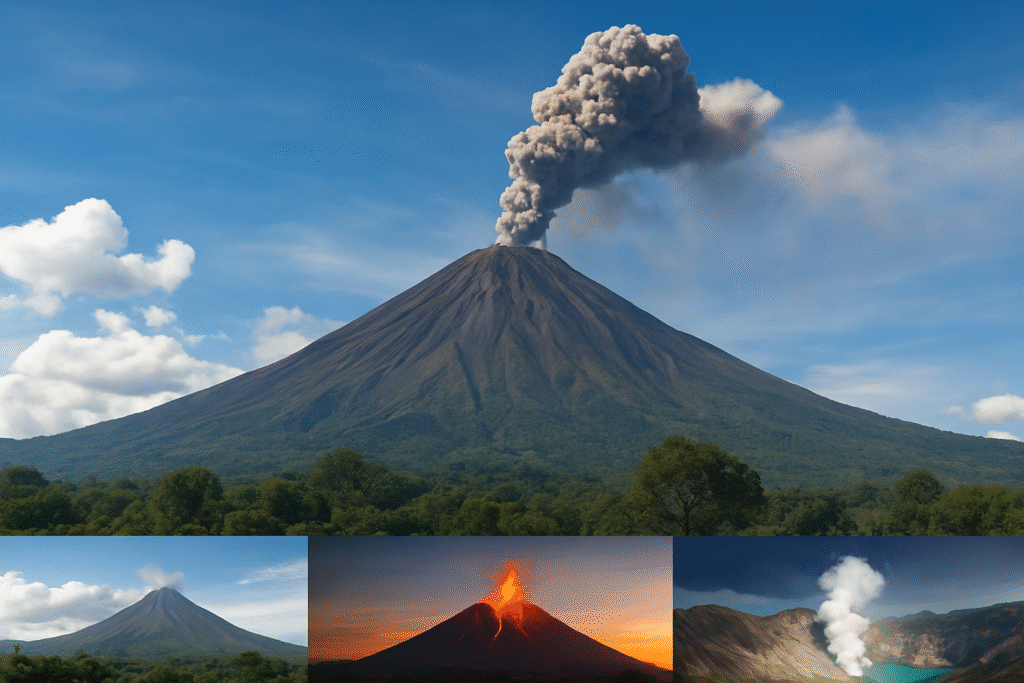
Volcanoes are the Earth’s most pulsating heartbeat. They shape mountains, nurture fertile land, and have even altered the fate of civilizations throughout history. On this planet, the relationship some countries have with volcanoes is not merely about “existence”— it is profound enough to influence culture, topography, agriculture, architecture, and daily life. This article will take you into the top ten countries with the most volcanoes globally— to understand why volcanoes are not just threats, but also sources from which life springs.
Data Explanation (Methodology)
The global number of volcanoes is not fixed, but the overall ranking is relatively stable. Data primarily comes from the long-term volcanic geology databases of the following international institutions:
Primary Data Sources
• Smithsonian Institution – Global Volcanism Program
• United States Geological Survey (USGS)
• Geological survey institutes of various countries
Statistical Scope Includes
• Known Volcanoes
• Active Volcanoes
• Dormant Volcanoes
The following ranking uses the “total number of known volcanoes + number of active volcanoes” as the primary metric.
Ranking: Top 10 Countries with the Most Volcanoes Globally
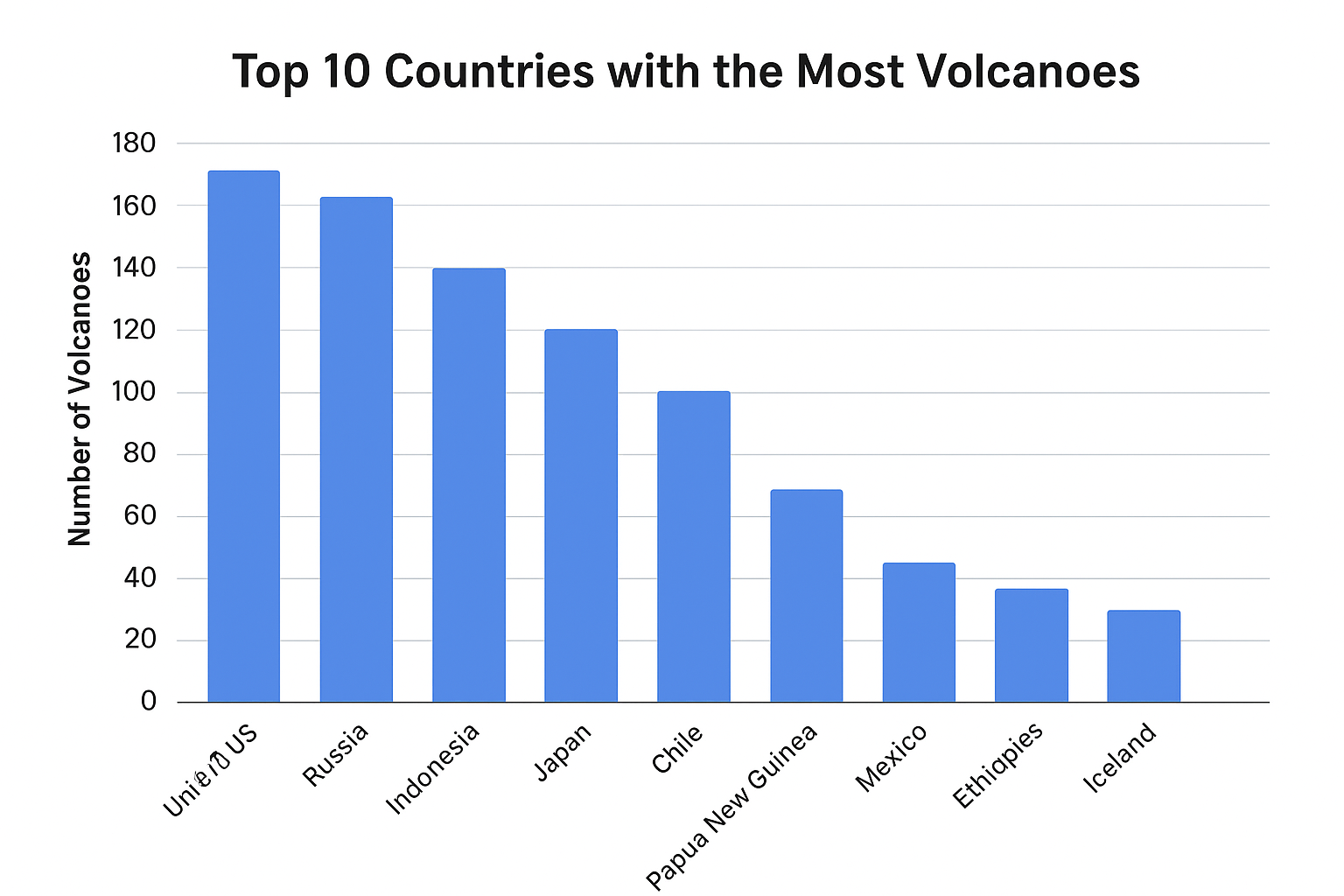
The following are the global top ten based on comprehensive volcanic database statistics:
| Rank | Country | Number of Volcanoes (Known) | Notes |
|---|---|---|---|
| 1 | United States | ~170 | |
| 2 | Russia | ~166 | |
| 3 | Indonesia | ~139 | |
| 4 | Japan | ~111 | |
| 5 | Chile | ~95 | |
| 6 | Papua New Guinea | ~55 | |
| 7 | Mexico | ~43 | |
| 8 | Ethiopia | ~39 | |
| 9 | Philippines | ~24 | |
| 10 | Iceland | ~19 |
Note: Figures are based on publicly verifiable records; excludes unconfirmed submarine volcanic edifices.
Profiles of the Top Ten Countries
1. United States
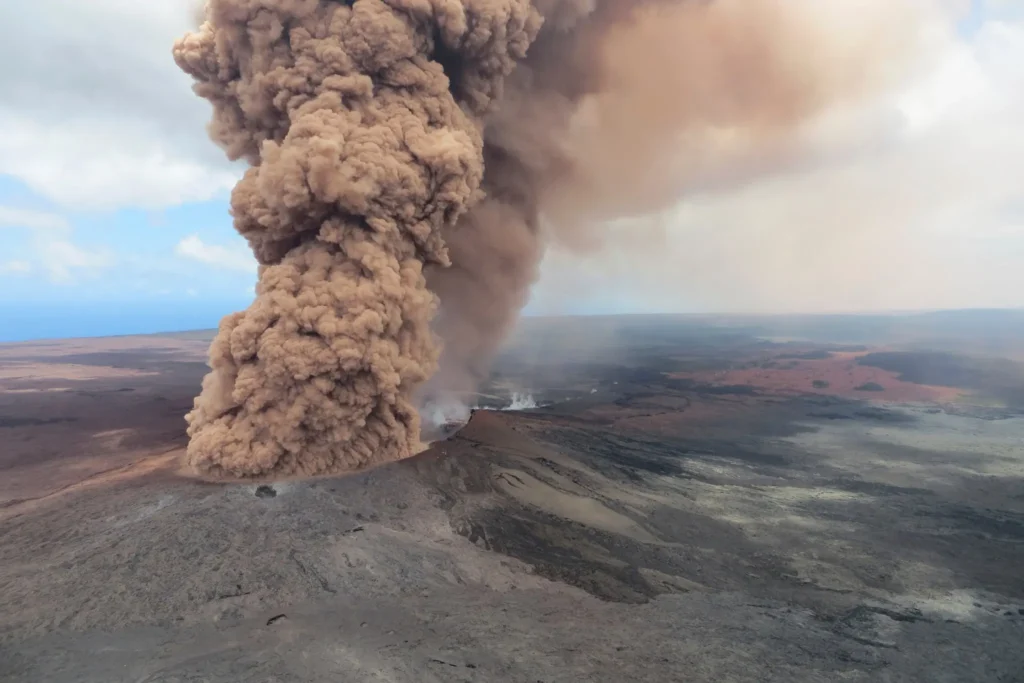
The United States has the most volcanoes of any country in the world. The state of Alaska alone has more volcanoes than the total number found in many countries. From the erupting lava of Hawaii to the supervolcano system of Yellowstone, the volcanic landscapes of the U.S. are diverse and magnificent. Volcanoes have not only shaped its mountains but have also given rise to stunning national parks.
2. Russia
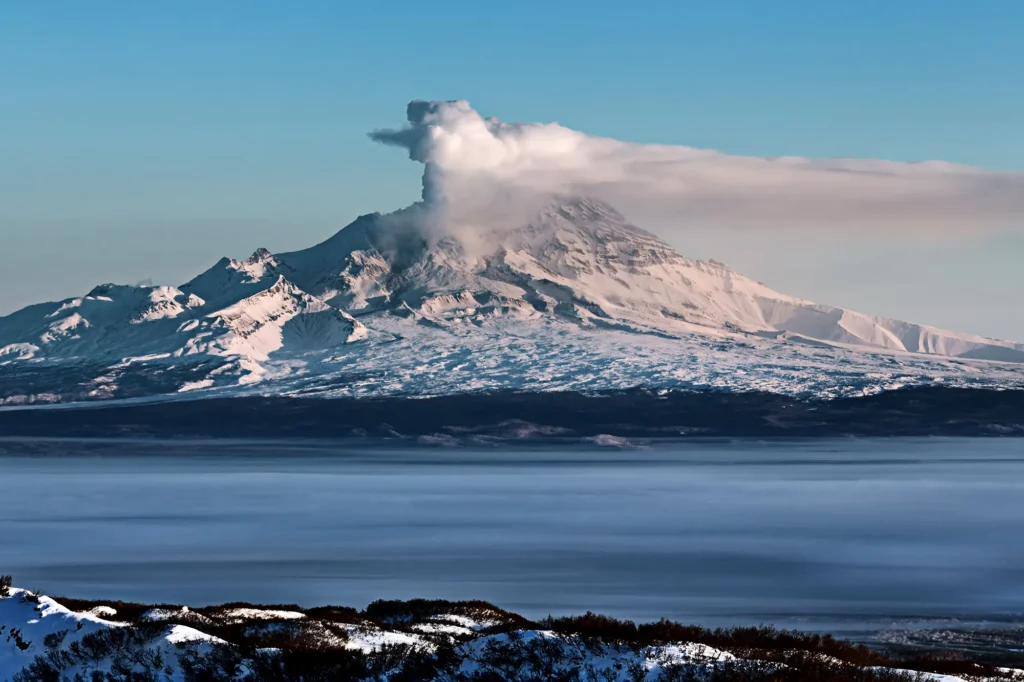
Almost all of Russia’s volcanoes are located on the Kamchatka Peninsula. This region is known as the “Museum of Volcanology,” where towering snow-capped mountains, ice caps, and active volcanic vents combine to create awe-inspiring natural wonders.
3. Indonesia
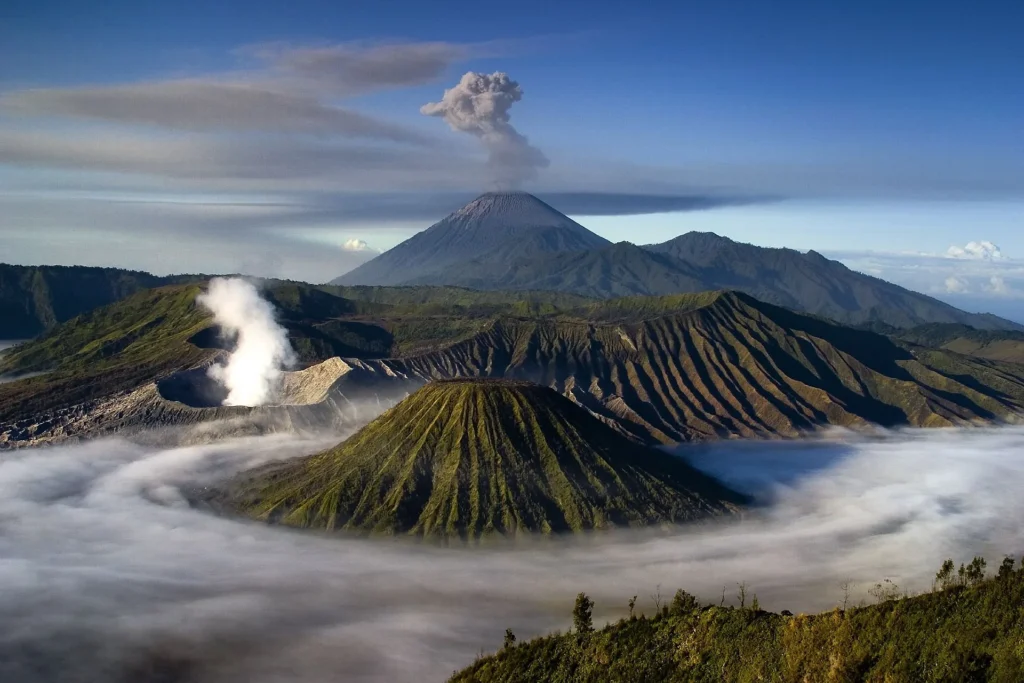
Dubbed the “Heart of the Ring of Fire,” Indonesia has the most active volcanoes globally. Famous tourist destinations like Java, Bali, and Lombok are intrinsically linked to volcanoes. Volcanic ash makes the soil exceptionally fertile, making it a crucial global producer of rice and spices.
4. Japan
Japan is essentially an archipelago sculpted by volcanoes. Mount Fuji, Sakurajima, Mount Aso… Volcanoes have not only influenced the topography but have also deeply permeated Japanese aesthetics and culture. The prosperity of the hot spring (onsen) culture also originates from volcanic activity.
5. Chile
A dense chain of volcanic systems runs along the Andes Mountains. Chile’s volcanic landscapes exhibit extreme altitude variations, featuring everything from glacial volcanoes to desert volcanoes.
6. Papua New Guinea
The volcanoes here are almost “constantly active.” The meeting of volcanoes and a tropical marine environment has created unique volcanic island chains. For local communities, volcanoes represent the power of the land and an indomitable force of nature.
7. Mexico
Mexico’s volcanoes span the “Trans-Mexican Volcanic Belt.” Many cities, such as Puebla and Mexico City, are located near volcanoes. Volcanoes are deeply connected to the Maya and Aztec civilizations.
8. Ethiopia
This is where the Earth is “tearing apart“—the East African Rift. Here, volcanoes accompany salt lakes, creating landscapes that seem almost science-fictional. The Danakil Depression is often called “the most alien-looking place on Earth.”
9. Philippines
Although not large in land area, the Philippines has a very high density of volcanoes. Taal Volcano, Mayon Volcano, and Mount Pinatubo have all had world-impacting eruptions. Volcanoes have also endowed the Philippines with some of the world’s most fertile island soils.
10. Iceland
Iceland is an island “recently born” from volcanic activity. Volcanoes give this country a magical atmosphere— black sand beaches, lava fields, steaming geothermal valleys… Icelanders even use volcanic energy for heating and electricity, truly realizing “the Earth glowing with power.”
Future Outlook
Technological Advancements in Prediction
Technology will enable more accurate volcanic eruption forecasting.
Geothermal Energy Expansion
More countries will harness geothermal energy as a key future power source.
Growth of Volcanic Tourism
Volcano tourism is becoming one of the fastest-growing segments of nature-based travel.
Ongoing Tectonic Activity
Tectonic activity will continue to make certain regions of the Earth “younger.”
Coexistence with Volcanoes
While humanity still cannot control volcanoes, we can learn to coexist with them more intelligently.
Q&A (Frequently Asked Questions)
Q1: Which country has the most volcanoes?
A: The United States.
Q2: Which region in the world has the most active volcanoes?
A: The Pacific Ring of Fire.
Q3: Do more volcanoes mean more disasters?
A: Not necessarily. It depends on the types of volcanoes and the population density of the surrounding areas.
Q4: Are there any benefits to volcanoes?
A: Yes, benefits include fertile soil, mineral resources, and geothermal energy.
Conclusion
Volcanoes are the heartbeat of our planet. They remind us that the Earth is not static, but in a constant state of creation and renewal. These countries breathe alongside their volcanoes. They bear the risks but also receive the gifts— this is the most primal, most awe-inspiring power of life itself.
Data Sources
Smithsonian Institution – Global Volcanism Program
https://volcano.si.edu
United States Geological Survey (USGS)
https://www.usgs.gov
Geological Survey of Japan
https://www.gsj.jp
Icelandic Met Office – Volcanology
https://en.vedur.is
Chile National Geology and Mining Service
https://www.sernageomin.cl
Papua New Guinea Geological Survey
Mexico National Center of Disaster Prevention (CENAPRED)
https://www.gob.mx/cenapred
Ethiopia Geological Survey
Philippine Institute of Volcanology and Seismology (PHIVOLCS)
https://www.phivolcs.dost.gov.ph