
Top 10 Dirtiest Countries in the World
Contents
Introduction
A clean environment is not just a luxury, but a fundamental human right. The cleanliness of air, water, and soil directly impacts health, lifespan, social productivity, and child development. Against the backdrop of globalization and rapid industrialization, some countries are facing a wave of being “the most polluted”: pollution, waste, dust, and factors endangering public health are intertwined. In a warm and authentic narrative style, using the latest data, this article brings you closer to the “10 most polluted countries in the world,” helping you understand the underlying reasons, challenges, and hopes.
Data Explanation
This article primarily uses IQAir’s World Air Quality Report, WorldPopulationReview’s aggregated country-level data on the “Most Polluted Countries,” and the World Health Organization (WHO) air quality database.
The core indicator is the annual average PM2.5 (fine particulate matter, measured in µg/m³), as it is the most commonly used standard by the WHO to measure air pollution, particularly its impact on respiratory health.
The ranking is based on countries with the highest annual average PM2.5 concentrations, supplemented by field evidence from media and NGO reports.
Note: Data represents national averages and is for reference only; specific cities or regions may be more severely affected or may have seen improvements.
Ranking: Top 10 Most Polluted Countries (Descending order by annual average PM2.5)
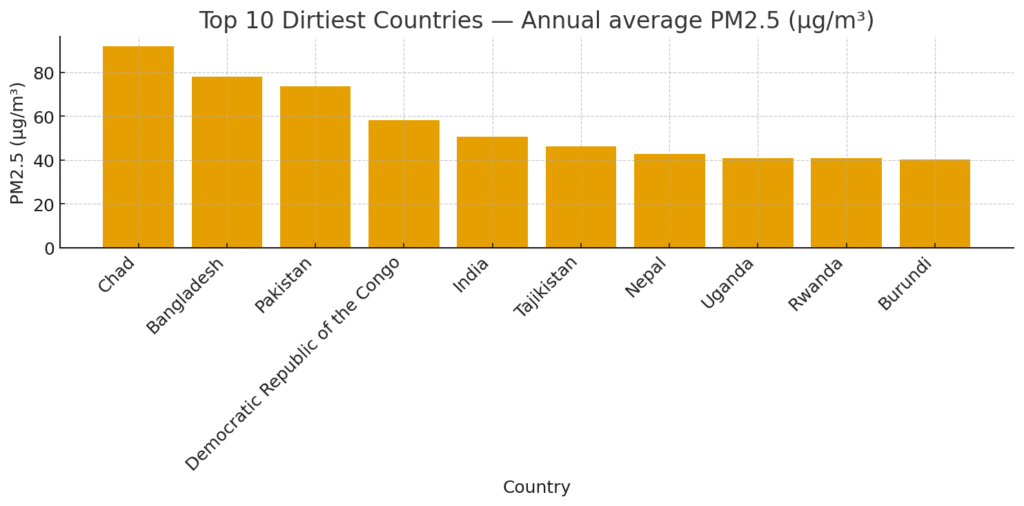
- Chad — Approx. 91.8 µg/m³ annual average
- Bangladesh — Approx. 78.0 µg/m³ annual average
- Pakistan — Approx. 73.7 µg/m³ annual average
- Democratic Republic of the Congo — Approx. 58.2 µg/m³ annual average
- India — Approx. 50.6 µg/m³ annual average
- Tajikistan — Approx. 46.3 µg/m³ annual average
- Nepal — Approx. 42.8 µg/m³ annual average
- Uganda — Approx. 41.0 µg/m³ annual average
- Rwanda — Approx. 40.8 µg/m³ annual average
- Burundi — Approx. 40.3 µg/m³ annual average
Note: The above values are approximate figures from publicly reported data for 2024-2025. The actual ranking may vary slightly with data updates.
Country Profiles
1. Chad
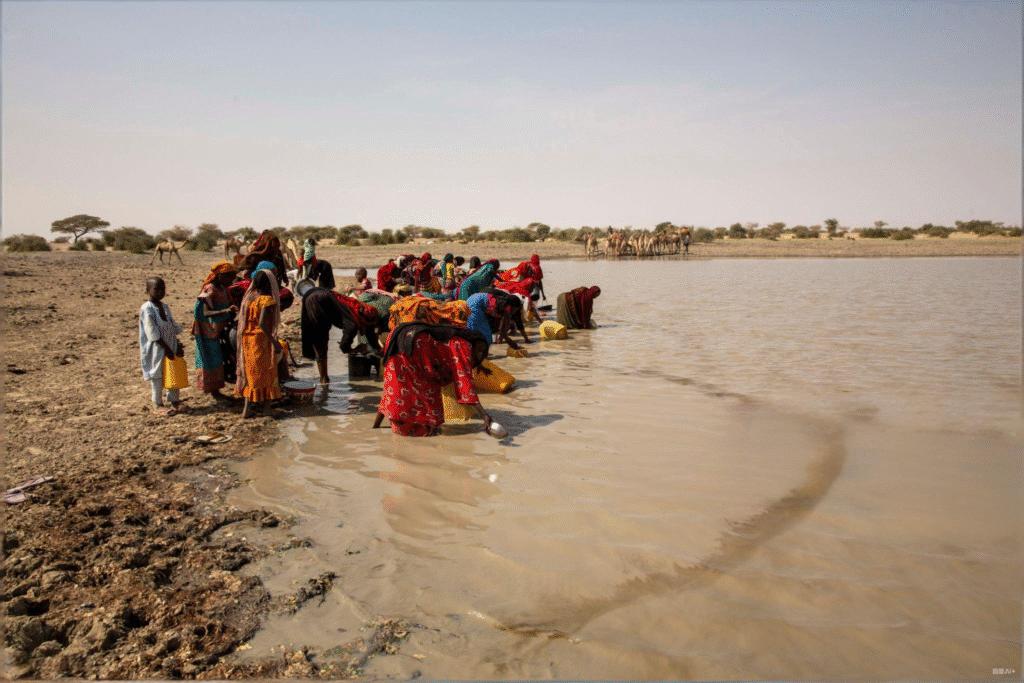
Pollution Sources: Sahara Desert dust, household use of wood and coal for cooking and heating, unmanaged landfill sites.
Health Impacts: Severe exceedance of PM2.5 standards, high incidence of respiratory problems in children.
Recommended Actions: Strengthen waste management, introduce clean cooking fuels, establish monitoring stations.
2. Bangladesh
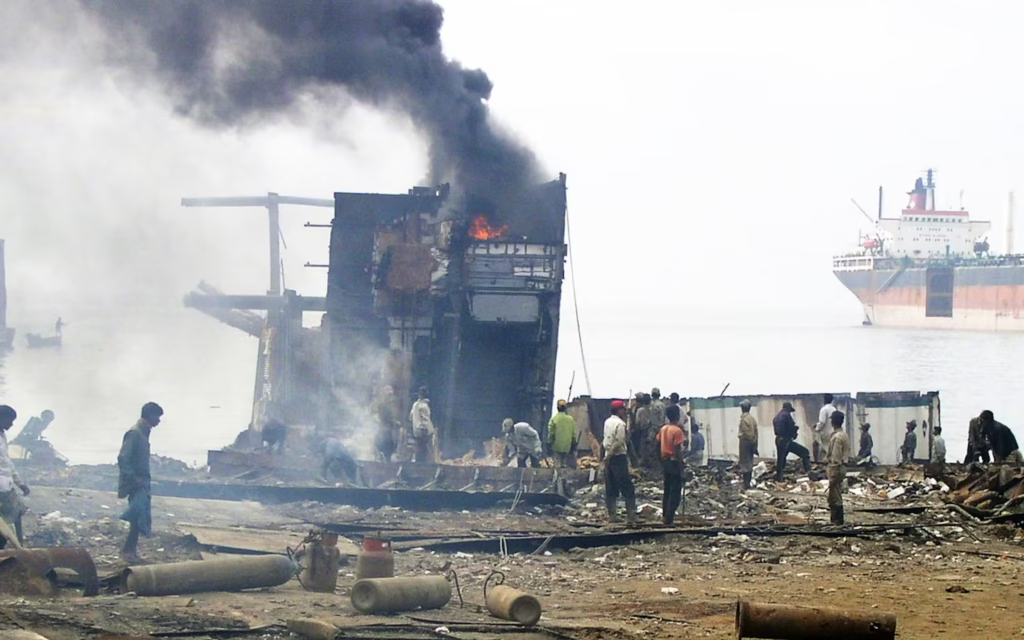
Pollution Sources: Emissions from brick kilns, urban traffic congestion, industrial zone exhaust.
Health Impacts: Cities like Dhaka are frequently ranked among the world’s worst for air quality.
Recommended Actions: Phase out old vehicles, improve brick kiln technology, plan for green spaces and urban ventilation.
3. Pakistan
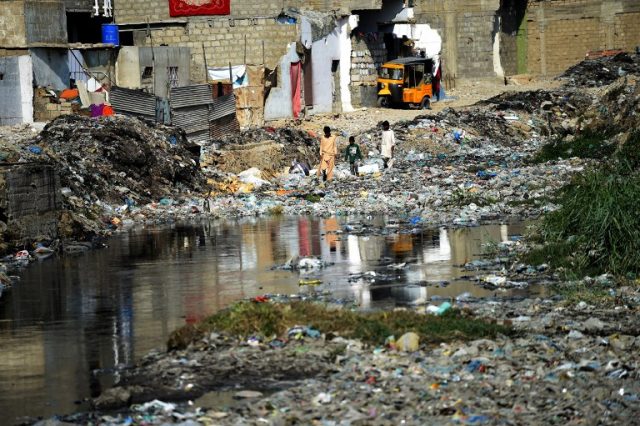
Pollution Sources: Agricultural burning, industrial emissions, smog accumulation due to temperature inversions trapping moisture and pollutants.
Health Impacts: Severe winter smog in cities like Lahore poses high health risks, especially for students.
Recommended Actions: Monitor and manage agricultural residue burning, implement clean energy policies, public health education.
4. Democratic Republic of the Congo
Pollution Sources: Deforestation, mining activities, lack of urban infrastructure.
Health Impacts: Poor air quality exacerbates the burden of respiratory and cardiovascular diseases.
Recommended Actions: Establish regulatory systems, promote cleaner mining technologies, aid governance strengthening.
5. India
Pollution Sources: Industrial emissions, vehicular traffic, winter heating, and open burning of waste.
Health Impacts: PM2.5 levels in many cities persistently exceed safe limits by more than ten times.
Recommended Actions: Continue advancing the National Clean Air Programme (NCAP), enhance regional cooperation and public participation.
6. Tajikistan
Pollution Sources: Coal heating in mountainous areas, wood-burning stoves, vehicle emissions.
Health Impacts: Severe accumulation during winter, particularly affecting children and the elderly.
Recommended Actions: Promote modern heating systems, improve ventilation, strengthen monitoring.
7. Nepal
Pollution Sources: Topography of the Kathmandu valley traps pollution, old vehicles, construction dust.
Health Impacts: Smog and high PM2.5 levels have significant effects, particularly at high altitudes.
Recommended Actions: Improve public transport, subsidize clean fuels, afforestation.
8. Uganda
Pollution Sources: Traffic congestion, open burning of waste, lack of comprehensive air quality monitoring.
Health Impacts: Poor urban air quality linked to rising respiratory illnesses.
Recommended Actions: Establish an air quality monitoring network, promote waste segregation and fuel alternatives, public education.
9. Rwanda
Pollution Sources: Despite its small size, rapid urbanization brings challenges from dust, traffic, and industry.
Health Impacts: Annual average PM2.5 is several times higher than WHO safety guidelines.
Recommended Actions: Integrate green infrastructure into urban planning, promote non-fossil fuel energy sources.
10. Burundi
Pollution Sources: Widespread use of wood-burning stoves, poor waste management, severe road dust.
Health Impacts: High incidence of respiratory diseases in children, significant urban-rural disparities.
Recommended Actions: Maternal and child health interventions, clean energy projects, strengthen environmental regulations.
Future Trends
While there are signs of global improvement in air quality overall, extreme events like heatwaves, wildfires, and dust storms are reversing progress in some regions.
Data coverage remains uneven: Low-income countries have fewer monitoring stations; many of the “most polluted” countries might be worse off than data suggests.
Enhancing governance capacity, promoting clean energy, and strengthening the sharing of international experience are key. Narrated warmly: even in fragile environments, there is a glimmer of hope—non-profit organizations, community participation, and green innovation are budding in several countries.
Q&A (Frequently Asked Questions)
Q: Why are most countries on the “most polluted” list developing nations?
A: This is often due to a combination of rapid industrialization, weak regulation, limited financial resources, and challenging geographical and climatic conditions. However, this is not destiny; improvement is possible.
Q: Does having the most severe air pollution mean the country is the “dirtiest”?
A: This article uses air pollution (PM2.5) as the primary indicator for “pollution” due to its clear health impacts and widely available data. However, “dirtiness” can also involve dimensions like water quality, waste, and soil pollution. This article focuses on one easily quantifiable and widely impactful indicator—air pollution.
Q: Is it possible for my country to appear on this list in the future?
A: Theoretically, yes. Monitoring indicates that factors like climate change, extreme weather events, urbanization, and unchanged energy structures can worsen air pollution. Prevention and mitigation are most effective the sooner they begin.
Conclusion
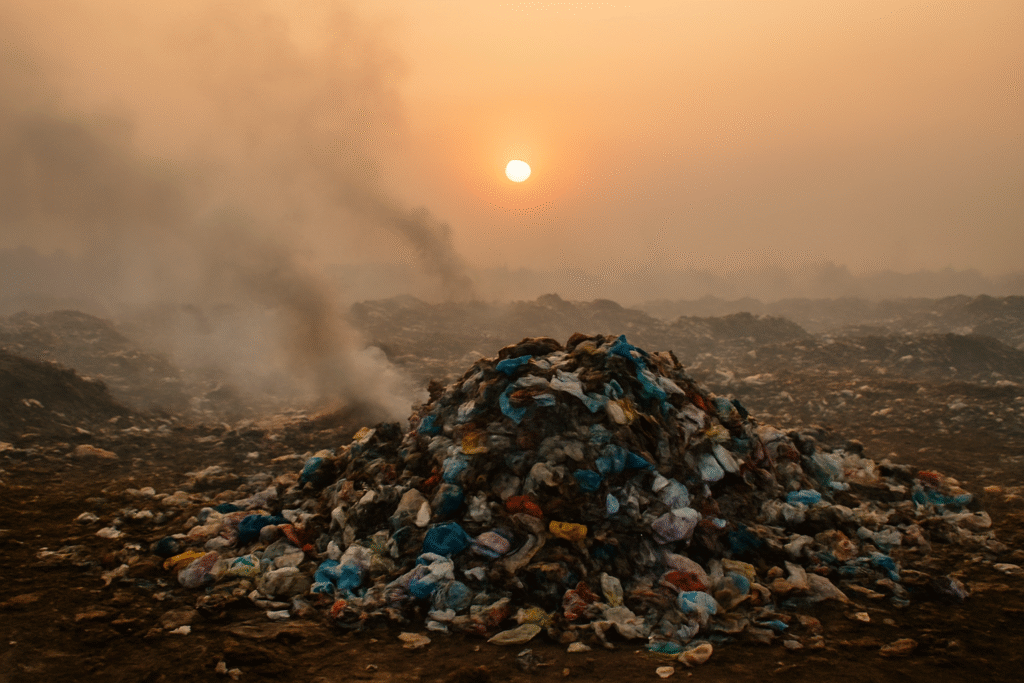
Seeing the ranking of the “most polluted” countries might be disheartening. But precisely because this data reveals real challenges, it also highlights the space for action and improvement. Every tree planted, every instance of waste sorting, and every clean energy project paves the way for cleaner air and a healthier future. May this article serve not only as awareness of a list but also as a part of driving change and fostering hope.
Data Sources
IQAir — 2024 World Air Quality Report. Swiss-based air-quality monitoring. URL: https://www.iqair.com/newsroom/waqr-2024-pr؟utm_source=chatgpt.com iqair.com+2iqair.com+2
WorldPopulationReview — Dirtiest Countries in the World 2025. Ranked by annual average PM2.5. URL: https://worldpopulationreview.com/country-rankings/dirtiest-countries-in-the-world World Population Review
VOA News — Only seven countries worldwide met WHO air-quality standards in 2024: data shows. URL: https://www.voanews.com/a/only-seven-countries-met-who-air-quality-standards-in-2024-data-shows/8006336.html Voice of America
The Guardian — Only seven countries worldwide meet WHO dirty-air guidelines, study shows. URL: https://www.theguardian.com/environment/2025/mar/11/only-seven-countries-worldwide-meet-who-air-quality-guidelines-study-shows 卫报
Indian Express — Top 10 world most and least polluted countries in 2024-25. URL: https://indianexpress.com/article/trending/top-10-world-most-and-least-polluted-countries-in-2024-25-9993096/ The Indian Express