
Top 10 Most Livable Countries in the World
Contents
Introduction
In an uncertain world, happiness and livability have become shared goals for people. A “livable country” not only signifies high income and safety but also represents social warmth, natural balance, and harmony in mental health. The 2025 Global Livability Index reminds us once again that the happiest places often thrive in the cold winds of Northern Europe, amidst lakes, forests, and a culture of equality.
Data Explanation
This ranking integrates multiple authoritative global data sources:
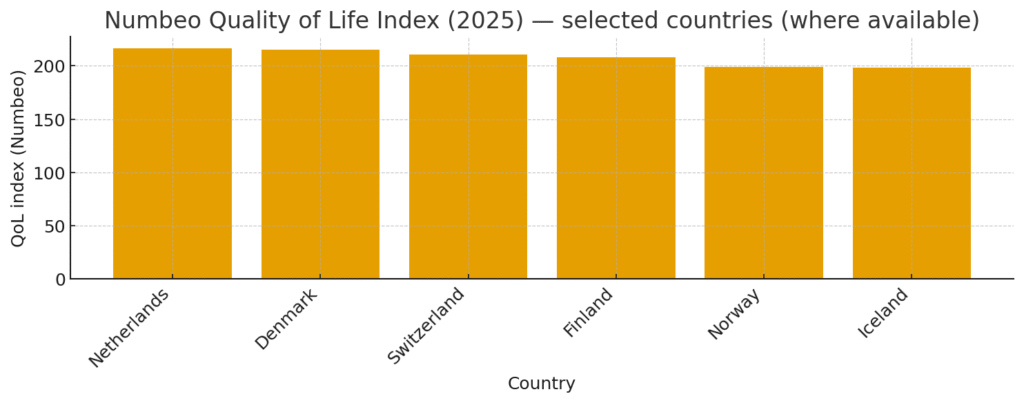
- Numbeo Quality of Life Index 2025
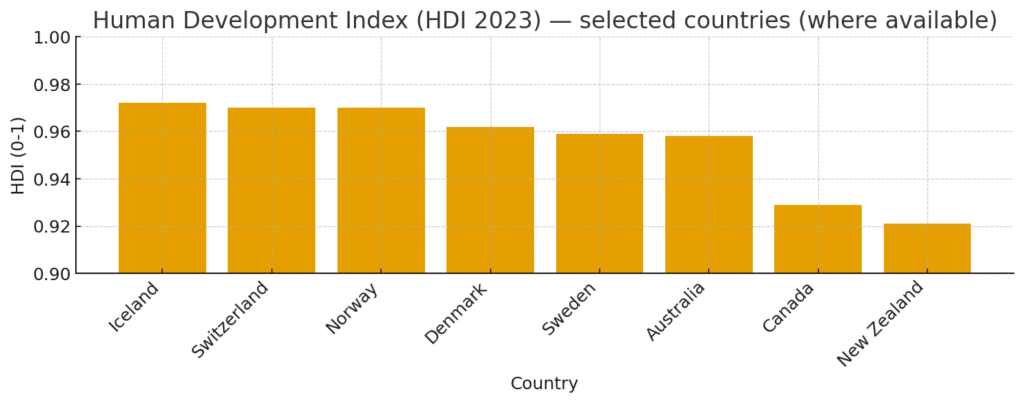
- UN Human Development Index (HDI 2023)
- OECD Better Life Index, World Happiness Report, Mercer Quality of Living Survey
Comprehensive Indicators Include:
- Quality of Life: Covers safety, healthcare, cost of living, commute, pollution, and housing affordability.
- Human Development Index (HDI): Health, education, and income.
- Social Happiness and Environmental Quality: Social trust, equality, and green energy usage ratio.
Charts and Images
•Comparison of Numbeo Quality of Life Index
•Comparison of HDI Human Development Index
Ranking: Top 10 Most Livable Countries 2025
| Rank | Country | Quality of Life Index | HDI | Key Characteristics |
|---|---|---|---|---|
| 1 | 🇫🇮 Finland | 208.3 | 0.961 | Education, happiness, balance of natural resources |
| 2 | 🇩🇰 Denmark | 215.1 | 0.962 | Social trust, equality, work-life balance |
| 3 | 🇨🇭 Switzerland | 210.9 | 0.970 | High income, high safety, low corruption |
| 4 | 🇳🇱 Netherlands | 216.5 | 0.956 | Freedom, urban design, humanized transportation |
| 5 | 🇸🇪 Sweden | 205.0 | 0.959 | Environmentally friendly, gender equality |
| 6 | 🇳🇴 Norway | 199.2 | 0.970 | Integration of energy resources and social welfare |
| 7 | 🇮🇸 Iceland | 198.0 | 0.972 | World-leading in equality and happiness |
| 8 | 🇨🇦 Canada | 195.0 | 0.929 | Multiculturalism, safe cities |
| 9 | 🇦🇺 Australia | 192.0 | 0.958 | Sunshine, freedom, and high education standards |
| 10 | 🇳🇿 New Zealand | 189.5 | 0.921 | Emphasis on natural environment and social trust |
Country Profiles: Three-Dimensional Analysis
| Country | Economy & Society | Environment & Safety | Happiness & Culture |
|---|---|---|---|
| Finland | High education and social trust system | Forest coverage over 70%, one of the cleanest air | World Happiness Index ranked first for six consecutive years |
| Denmark | Stable employment and balanced high-tax welfare | Urban transportation dominated by bicycles | “Hygge” culture makes life warmer |
| Switzerland | High per capita GDP and innovation power | Alpine clean energy powerhouse | Culture of freedom and neutrality |
| Netherlands | Emphasis on social inclusion and educational innovation | World-leading water resource management | A nation of tolerance and creativity |
| Sweden | Nordic model of equality | Green energy ratio up to 70% | Focus on individual happiness and collective responsibility |
| Norway | Oil wealth transformed into social welfare | Extremely high public safety | Perfect work-life balance |
| Iceland | Exemplar of high happiness in a small country | Geothermal energy driven by volcanoes | Tight-knit communities, high interpersonal trust |
| Canada | Immigrant-friendly and multicultural society | Nature close at hand | Gentle and inclusive social culture |
| Australia | High wages and education levels | Excellent urban air quality | Spirit of warmth, sunshine, and freedom |
| New Zealand | Leading sustainable development policies | Widespread natural reserves | Harmony between people and nature |
Future Trends

Over the next decade, livability indices may be increasingly influenced by:
- The impact of climate change on living environments.
- The proliferation of digitalization and remote work.
- Sustained focus on mental health and social connections.
The “social trust” model of Nordic countries may become the standard template for future human livability.
Q&A
Q1: Why are there no Asian countries on the list?
A1: Although Japan and Singapore have high quality of life, housing prices and work pressure affect overall happiness.
Q2: Does livability necessarily mean happiness?
A2: Not necessarily. Livability is a prerequisite for structural happiness, but individual happiness also depends on social belonging and psychological state.
Q3: Do these rankings change annually?
A3: Yes. Economic, climate, and policy changes can all affect the rankings.
Conclusion
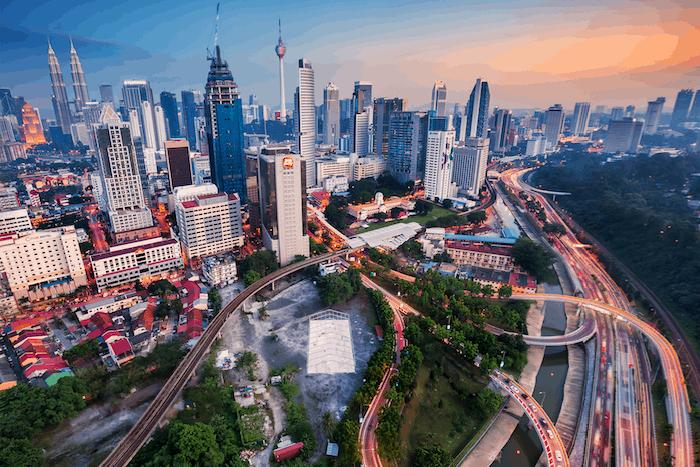
“Livability” is not just a label for a city, but a philosophy of life. It means that in an atmosphere of sunshine, trust, and equality, people can live, work, and think freely. A truly livable country not only helps people live longer but also live better.
Data Sources
Numbeo — Quality of Life Index 2025
United Nations Development Programme — Human Development Report 2024 (HDI)
OECD — Better Life Index
Mercer — Quality of Living City Ranking 2024
World Happiness Report 2024