
Top 10 Sports in the World
Contents
Introduction
Sport is more than competition; it is a shared experience that transcends language, culture, and national borders. From the street court to the world-class stadium, from amateur pastime to global industry, sport shapes the way billions live their lives.
This articlemakes comprehensive judgments by integrating global participation, viewership scale, commercial influence, and cultural penetration. Based on these criteria, this article identifies the 10 most influential and widespread sports in the world today.
Ranking Methodology
This list is not ranked by a single dimension, but is a comprehensive assessment based on the following factors:
Global Participation (amateur and professional)
Viewership Scale (TV, streaming, and live audiences)
Commercial Value (broadcast rights, sponsorships, industry size)
Cultural and Geographic Reach
Maturity of International Governing Bodies and Event Structures
Top 10 Sports in the World
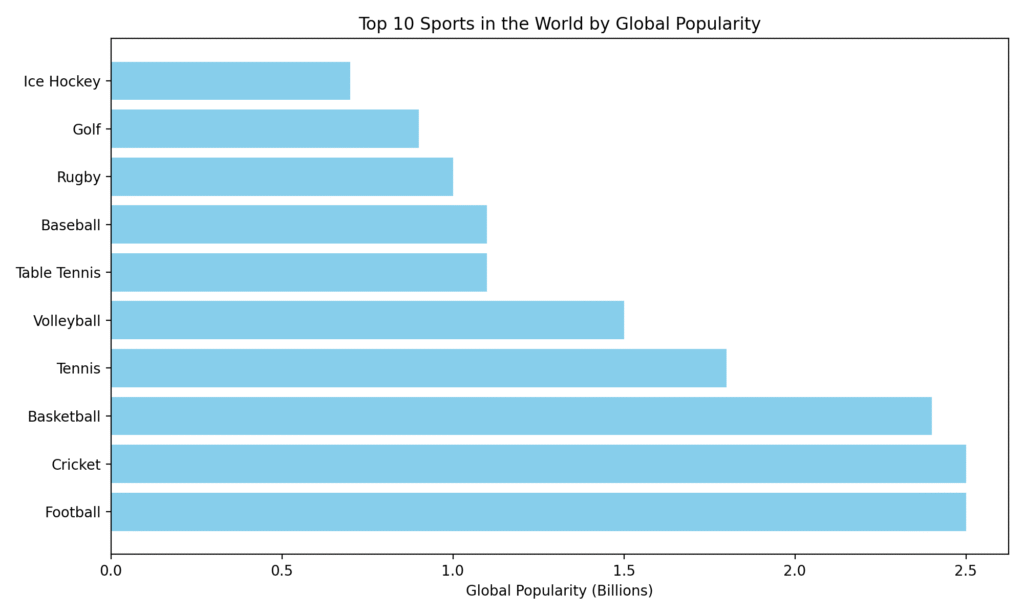
| Rank | Sport | Global Popularity |
|---|---|---|
| 1 | Football (Soccer) | Worldwide |
| 2 | Cricket | Asia, UK, Oceania |
| 3 | Basketball | Worldwide |
| 4 | Tennis | Worldwide |
| 5 | Volleyball | Worldwide |
| 6 | Table Tennis | Asia, Europe |
| 7 | Baseball | Americas, East Asia |
| 8 | Rugby | Europe, Oceania |
| 9 | Golf | Worldwide |
| 10 | Ice Hockey | Europe, North America |
Sports at a Glance
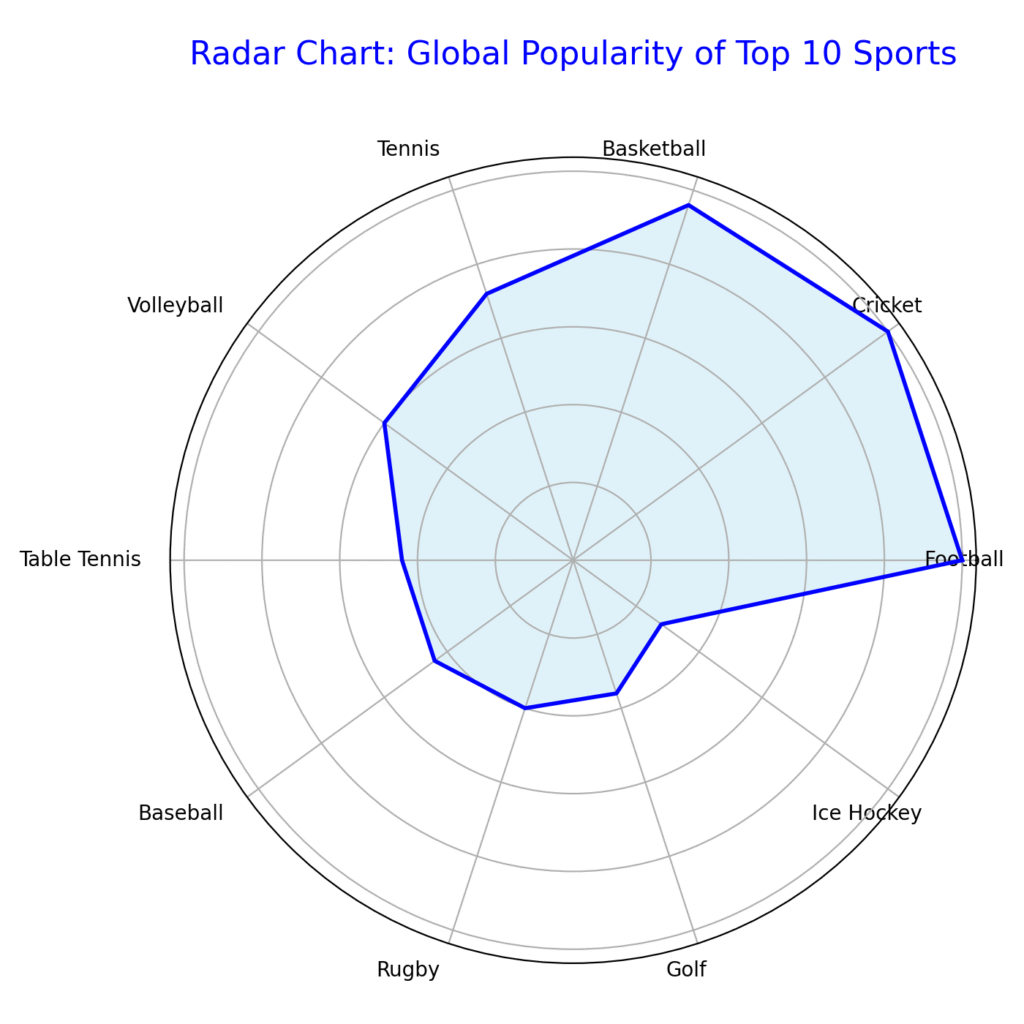
1. Football (Soccer)

Participation: Over 250 million registered players.
Event Impact: FIFA World Cup, UEFA Champions League.
Cultural Status: The undisputed global number one sport.
2. Cricket

Participation: Heavily concentrated in India, Pakistan, and Australia.
Event Impact: ICC Cricket World Cup.
Key Trait: Known for long match formats and strong national identity.
3. Basketball

Participation: Highly popular in urban areas worldwide.
Event Impact: NBA, FIBA Basketball World Cup.
Key Trait: Fast-paced and highly commercialized.
4. Tennis
Participation: Widespread individual and amateur play.
Event Impact: The four Grand Slam tournaments.
Key Trait: Features a stable, truly global professional circuit.
5. Volleyball
Participation: Extremely popular in schools and communities.
Event Impact: Olympic Games.
Key Trait: Notable for a balanced ratio of male and female participation.
6. Table Tennis
Participation: Immensely popular in Asia.
Event Impact: World Table Tennis Championships, Olympics.
Key Trait: Technically demanding yet low-cost to play.
7. Baseball
Participation: Strong in the USA, Japan, and Latin America.
Event Impact: Major League Baseball (MLB).
Key Trait: Emphasizes statistics and deep strategy.
8. Rugby
Participation: Prominent in Europe and Oceania.
Event Impact: Rugby World Cup.
Key Trait: Characterized by intense physicality and high teamwork.
9. Golf
Participation: Popular among middle-to-high income demographics.
Event Impact: The Masters Tournament.
Key Trait: Uniquely blends social interaction with competition.
10. Ice Hockey
Participation: Concentrated in colder climate regions.
Event Impact: National Hockey League (NHL).
Key Trait: Renowned for its high speed and physical intensity.
Trend Analysis
Globally, the way sports are consumed is rapidly digitizing. Streaming, short-form video, and esports-style presentation are helping traditional sports reach new audiences.
Simultaneously, low-barrier, urban-friendly sports (like basketball, football, and volleyball) continue to grow, while higher-cost sports increasingly emphasize experience and social aspects.
Looking ahead, women’s sports and youth participation will become key metrics for measuring a sport’s influence.
Frequently Asked Questions (Q&A)
Q1: Is the ranking based solely on viewer numbers?
No. Participation rates and cultural impact are equally important.
Q2: Why is Esports not included?
This article focuses on traditional sports. Esports is considered a separate category.
Q3: Are regional sports undervalued?
The list prioritizes global influence, not regional popularity.
Q4: Do Olympic sports automatically make the list?
Not necessarily. They must still meet thresholds for global participation and viewership.
Q5: Why is Volleyball ranked above Baseball?
Volleyball has higher penetration in schools and developing nations.
Q6: Why does Football remain number one long-term?
Due to its low barrier to entry, strong cultural identity, and global tournament structure.
Q7: Is commercial value important?
Yes, it is a key indicator of a sport’s long-term influence and sustainability.
Q8: Will this list change in the future?
Yes, but the top sports are relatively stable.
Conclusion
The world’s most popular sports typically share three common traits: easy-to-understand rules, a low barrier to entry, and a powerful event ecosystem.
From football to basketball, cricket to volleyball, these sports have not only shaped the sports industry but also profoundly influence society and culture.
On a personal level, choosing a sport that suits you is far more meaningful than any ranking.
Data Sources
- FIFA – Global Football Participation
https://www.fifa.com - ICC – Cricket Participation & Viewership
https://www.icc-cricket.com - NBA & FIBA Reports
https://www.nba.com
https://www.fiba.basketball - IOC – Olympic Sports Overview
https://olympics.com/ioc - Statista – Global Sports Market
https://www.statista.com/topics/962/sports/